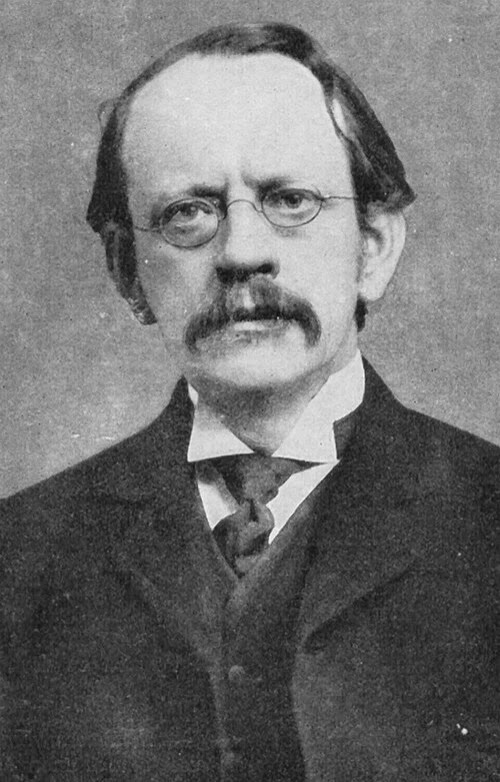
J. J. Thomson
जे जे थोमसन
British physicist (1856-1940)
नेपालीमा पढ्नुहोस् · हिंदी में पढ़ें
- नेपाली · English · हिंदीRead in your language
- CitedEvery fact sourced
- Ad-freeNo ads, no tracking
Sir Joseph John Thomson (18 December 1856 – 30 August 1940) was a British physicist. He received the 1906 Nobel Prize in Physics "in recognition of the great merits of his theoretical and experimental investigations on the conduction of electricity by gases." In 1897, he showed that cathode rays were composed of previously unknown negatively charged particles (now called electrons), which he calculated must have bodies much smaller than atoms and a very large charge-to-mass ratio. The electron was the first subatomic particle to be discovered.
Quick facts
Positions held wd
- Master of Trinity College, Cambridge (1918–1940)
- President of the Royal Society (1915–1920)
Awards wd
- Nobel Prize in Physics (1906)
- Fellow of the Royal Society (1884)
- Copley Medal (1914)
- Royal Medal (1894)
- Elliott Cresson Medal (1910)
- Hughes Medal (1902)
- Faraday Medal (1925)
- Hodgkins Medal (1902)
- Albert Medal (1915)
- Franklin Medal (1922)
- Adams Prize (1882)
- Royal Society Bakerian Medal (1913)
- Guthrie Lecture (1928)
- Knight Bachelor (1908)
- Dalton Medal (1931)
About
Thomson is credited with finding the first evidence for isotopes of a stable (non-radioactive) element in 1912, as part of his exploration into the composition of canal rays (positive ions). His experiments to determine the nature of positively charged particles, with Francis William Aston, were the first use of mass spectrometry and led to the development of the mass spectrograph.
Thomson was an influential teacher, and seven of his students went on to win Nobel Prizes: Ernest Rutherford (Chemistry 1908), Lawrence Bragg (Physics 1915), Charles Barkla (Physics 1917), Francis William Aston (Chemistry 1922), Charles Thomson Rees Wilson (Physics 1927), Owen Richardson (Physics 1928) and Edward Victor Appleton (Physics 1947). His son, George Paget Thomson, shared the 1937 Nobel Prize in Physics with Clinton Davisson "for their experimental discovery of the diffraction of electrons by crystals".
People also search for
 Alan Hodgkin
 Edgar Adrian
 Andrew Huxley
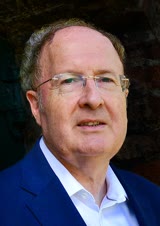 Gregory Winter
 Howard Florey
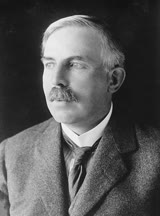 Ernest Rutherford
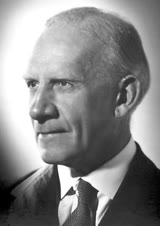 Robert Robinson
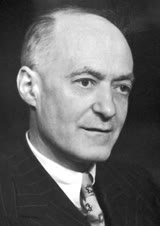 Cyril N. Hinshelwood
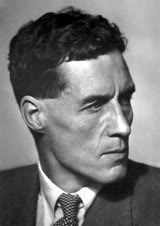 Patrick Blackett
Questions
- When was J. J. Thomson born?
- J. J. Thomson was born on 18 December 1856 in Cheetham Hill.
- What positions has J. J. Thomson held?
- Positions held by J. J. Thomson include: Master of Trinity College, Cambridge (1918–1940); President of the Royal Society (1915–1920).
- Where did J. J. Thomson study?
- J. J. Thomson was educated at University of Manchester, Trinity College, Victoria University of Manchester, University of Cambridge.
Sources
- Wikipedia (English): J. J. Thomson · CC BY-SA 4.0
- Wikipedia (Nepali): जे जे थोमसन · CC BY-SA 4.0
- Wikidata item Q47285 · CC0 1.0
- Image: J.J Thomson.jpg by Not Mentioned (Public domain)

Last updated · facts checked 3 November 2026
Cite this page
"J. J. Thomson". DigiNepal. Last updated 1 November 2026. https://diginpl.com/people/j-j-thomson. Retrieved 4 November 2026.
Is this you, or do you work in this person's office? Claim this profile