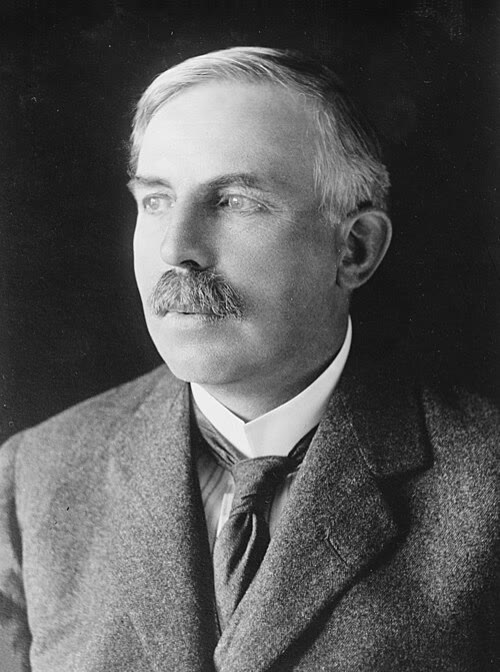
Ernest Rutherford
अर्नेस्ट रदरफोर्ड
New Zealand physicist (1871–1937)
नेपालीमा पढ्नुहोस् · हिंदी में पढ़ें
- नेपाली · English · हिंदीRead in your language
- CitedEvery fact sourced
- Ad-freeNo ads, no tracking
Ernest Rutherford, 1st Baron Rutherford of Nelson (30 August 1871 – 19 October 1937) was a New Zealand physicist and chemist who was a pioneering researcher in both atomic and nuclear physics. He has been described as "the father of nuclear physics" and "the greatest experimentalist since Michael Faraday". In 1908, he was awarded the Nobel Prize in Chemistry "for his investigations into the disintegration of the elements, and the chemistry of radioactive substances."
Quick facts
- Born
- wd
- Place of birth
- Spring Grove wd
- Died
- wd
- Place of death
- Cambridge wd
- Citizenship
- New Zealand wd
- Occupation
- nuclear physicist, chemist, physicist, professor, politician, university teacher wd
- Education
- University of Canterbury, University of Cambridge, Trinity College, Nelson College wd
- Spouse
- Mary Georgina Rutherford wd
Positions held wd
- member of the House of Lords (22 January 1931 – 19 October 1937)
- President of the Royal Society (1925–1930)
- Langworthy Professor (1907–1919)
Awards wd
- Hector Medal (1916)
- Nobel Prize in Chemistry (1908)
- Matteucci Medal (1913)
- Copley Medal (1922)
- Franklin Medal (1924)
- Elliott Cresson Medal (1910)
- Fellow of the Royal Society
- Faraday Lectureship Prize (1936)
- Wilhelm Exner Medal (1936)
- Faraday Medal (1930)
- Rumford Medal (1904)
- Albert Medal (1928)
- Royal Society Bakerian Medal (1920)
- Honorary Fellow of the Royal Society Te Apārangi
- Honorary Fellow of the Royal Society of Edinburgh
About
Rutherford's discoveries include the concept of radioactive half-life, the radioactive element radon, and the differentiation and naming of alpha and beta radiation. Together with Thomas Royds, Rutherford is credited with proving that alpha radiation is composed of helium nuclei. In 1911, he theorised that atoms have their charge concentrated in a very small nucleus. He arrived at this theory through his discovery and interpretation of Rutherford scattering during the gold foil experiment performed by Hans Geiger and Ernest Marsden. In 1912, he invited Niels Bohr to join his lab, leading to the Bohr model of the atom. In 1917, he performed the first artificially induced nuclear reaction by conducting experiments in which nitrogen nuclei were bombarded with alpha particles. These experiments led him to discover the emission of a subatomic particle that he initially called the "hydrogen atom", but later (more precisely) renamed the proton. He is also credited with developing the atomic numbering system alongside Henry Moseley. His other achievements include advancing the fields of radio communications and ultrasound technology.
Rutherford became Director of the Cavendish Laboratory at the University of Cambridge in 1919. Under his leadership, the neutron was discovered by James Chadwick in 1932. In the same year, the first controlled experiment to split the nucleus was performed by John Cockcroft and…
People also search for
 Alan Sugar
 Swraj Paul, Baron Paul
 Gerald Grosvenor, 6th Duke of Westminster
 David Somerset, 11th Duke of Beaufort
 Howard Florey
 Patrick Blackett
 Robert Robinson
 Cyril N. Hinshelwood
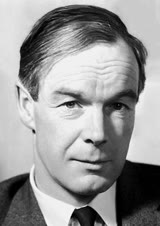 Alan Hodgkin
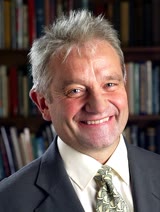 Paul Nurse
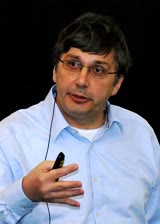 Andre Geim
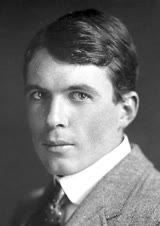 Lawrence Bragg
Questions
- When was Ernest Rutherford born?
- Ernest Rutherford was born on 30 August 1871 in Spring Grove.
- What positions has Ernest Rutherford held?
- Positions held by Ernest Rutherford include: member of the House of Lords (1931–1937); President of the Royal Society (1925–1930); Langworthy Professor (1907–1919).
- Where did Ernest Rutherford study?
- Ernest Rutherford was educated at University of Canterbury, University of Cambridge, Trinity College, Nelson College.
Sources
- Wikipedia (English): Ernest Rutherford · CC BY-SA 4.0
- Wikipedia (Nepali): अर्नेस्ट रदरफोर्ड · CC BY-SA 4.0
- Wikidata item Q9123 · CC0 1.0
- Image: Ernest Rutherford LOC.jpg by George Grantham Bain Collection (Library of Congress) (Public domain)

Last updated · facts checked 3 November 2026
Cite this page
"Ernest Rutherford". DigiNepal. Last updated 31 October 2026. https://diginpl.com/people/ernest-rutherford. Retrieved 3 November 2026.
Is this you, or do you work in this person's office? Claim this profile