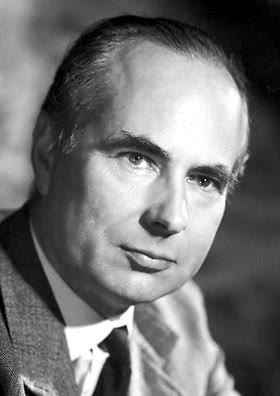
Andrew Huxley
English physiologist and biophysicist (1917–2012)
नेपालीमा पढ्नुहोस् · हिंदी में पढ़ें
- नेपाली · English · हिंदीRead in your language
- CitedEvery fact sourced
- Ad-freeNo ads, no tracking
Sir Andrew Fielding Huxley (22 November 1917 – 30 May 2012) was an English physiologist and biophysicist. He was born into the prominent Huxley family. After leaving Westminster School in central London, he went to Trinity College, Cambridge, on a scholarship, after which he joined Alan Hodgkin to study nerve impulses. Their eventual discovery of the basis for propagation of nerve impulses (called an action potential) earned them the Nobel Prize in Physiology or Medicine in 1963. They made their discovery from the giant axon of the Atlantic squid. Soon after the outbreak of the Second World War, Huxley was recruited by the British Anti-Aircraft Command and later transferred to the Admiralty. After the war he resumed research at the University of Cambridge, where he developed interference microscopy that would be suitable for studying muscle fibres.
Quick facts
- Born
- wd
- Place of birth
- Hampstead wd
- Died
- wd
- Place of death
- Cambridge wd
- Citizenship
- United Kingdom wd
- Occupation
- neuroscientist, physicist, physician, physiologist, biophysicist wd
- Education
- Trinity College, Westminster School, University College School, Imperial College School of Medicine wd
- Spouse
- Jocelyn Richenda Gammell Pease wd
Positions held wd
- Master of Trinity College, Cambridge (1984–1990)
- President of the Royal Society (1980–1985)
Awards wd
- Fellow of the Royal Society (1955)
- Nobel Prize in Physiology or Medicine (1963)
- honorary doctor of the Saarland University (1964)
- Croonian Medal and Lecture (1967)
- Copley Medal (1973)
- Annual Review Prize Lecture (1973)
- Baly Medal (1975)
- honorary doctorate of the University of the Mediterranean - Aix Marseille II (1981)
- Knight Bachelor
- Order of Merit
- Honorary member of the British Biophysical Society
- Swammerdam Medal (1997)
About
In 1952, he was joined by a German physiologist Rolf Niedergerke. Together they discovered in 1954 the mechanism of muscle contraction, popularly called the "sliding filament theory", which is the foundation of our modern understanding of muscle mechanics. In 1960 he became head of the Department of Physiology at University College London. He was elected a Fellow of the Royal Society in 1955, and President in 1980. The Royal Society awarded him the Copley Medal in 1973 for his collective contributions to the understanding of nerve impulses and muscle contraction. He was conferred a Knight Bachelor by the Queen in 1974, and was appointed to the Order of Merit in 1983. He was a fellow of Trinity College, Cambridge, until his death.
People also search for
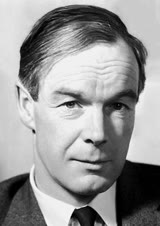 Alan Hodgkin
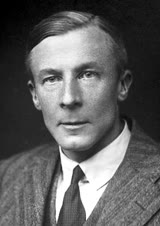 Edgar Adrian
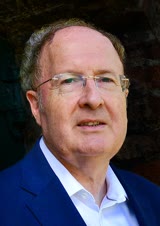 Gregory Winter
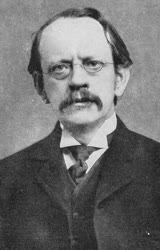 J. J. Thomson
 Howard Florey
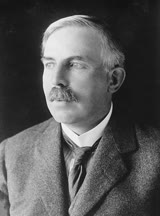 Ernest Rutherford
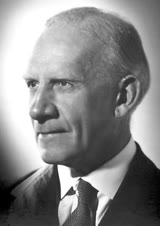 Robert Robinson
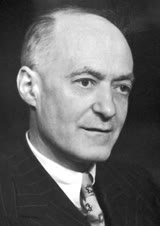 Cyril N. Hinshelwood
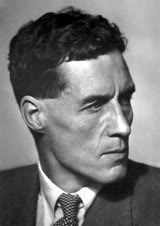 Patrick Blackett
Questions
- When was Andrew Huxley born?
- Andrew Huxley was born on 22 November 1917 in Hampstead.
- What positions has Andrew Huxley held?
- Positions held by Andrew Huxley include: Master of Trinity College, Cambridge (1984–1990); President of the Royal Society (1980–1985).
- Where did Andrew Huxley study?
- Andrew Huxley was educated at Trinity College, Westminster School, University College School, Imperial College School of Medicine.
Sources
- Wikipedia (English): Andrew Huxley · CC BY-SA 4.0
- Wikidata item Q104607 · CC0 1.0
- Image: Andrew Fielding Huxley nobel.jpg by Unknown author Unknown author (Public domain)

Last updated · facts checked 3 November 2026
Cite this page
"Andrew Huxley". DigiNepal. Last updated 31 October 2026. https://diginpl.com/people/andrew-huxley. Retrieved 3 November 2026.
Is this you, or do you work in this person's office? Claim this profile