Raksha Bandhan
श्रावण शुक्ल पूर्णिमा
Hindu
Dates
| 2083 BS | 28 Aug 2026 (12 Bhadra 2083 BS) | Reported by Wikipedia source |
| 2084 BS | Shukla Purnima (full moon) of Shravana — date to be announced | Date to be announced |
When: Shukla Purnima (full moon) of Shravana (Wikipedia)
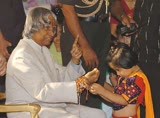
Raksha Bandhan is a popular and traditionally Hindu annual rite or ceremony that is central to a festival of the same name celebrated in South Asia, and among people around the world influenced by Hindu culture. On this day, sisters of all ages tie a talisman or amulet, called the rakhi, around the wrists of their brothers. The sisters symbolically protect the brothers, receive a gift in return, and traditionally invest the brothers with a share of the responsibility of their potential care.
Raksha Bandhan is observed on the last day of the Hindu lunar calendar month of Shravana, which typically falls in August. The expression "Raksha Bandhan" (literally, Sanskrit for "the bond of protection, obligation, or care") is now principally applied to this ritual. Until the mid-20th century, the expression was more commonly applied to a similar ritual, held on the same day, with precedence in ancient Hindu texts. In that ritual, a domestic priest ties amulets, charms, or threads on the wrists of his patrons, or changes their sacred thread, and receives gifts of money. This is still the case in some places. By contrast, the sister-brother festival, with origins in folk culture, had names which varied with location. Some were rendered as saluno, silono, and rakri. A ritual associated with saluno included the sisters placing shoots of barley behind the ears of their brothers.
Of special significance to married women, Raksha Bandhan is rooted in the practice of territorial or village exogamy. The bride marries out of her natal village or town, and her parents by custom do not visit her in her married home. In rural north India, large numbers of married Hindu women travel back to their parents' homes every year for the ceremony. The brothers also travel to their sisters' married home to escort them back. Many younger married women arrive a few weeks earlier at their natal homes and stay until the ceremony. The brothers serve as lifelong intermediaries between their sisters' married and parental homes, as well as potential stewards of their security.
In urban India, where families are increasingly nuclear, the festival has become more symbolic but continues to be highly popular. The rituals associated with this festival have spread beyond their traditional regions and have been transformed through technology and migration. Other factors that have played a role are: the movies, social interaction, and promotion by politicized Hinduism, as well as by the nation state. Among females and males who are not blood relatives, the act of tying the rakhi amulets has given rise to the tradition of voluntary kin relations, which has sometimes cut across lines of caste, class, and religion. Authority figures have been included in such a ceremony.
नेपालीमा
हिन्दुहरूको धार्मिक तथा साँस्कृतिक पर्व श्रावणी पूर्णीमाका दिन अध्यायोपाकर्म वेदोपाकर्म वा वेदारम्भ कर्म गरी मनाइन्छ । यसै दिन महर्षि याज्ञवल्क्यले आदित्य ब्रह्म(सूर्य)बाट वेद प्राप्त गरेका थिए । अतः यस दिनलाई वेद जयन्तीको रूपमा पनि चिनिन्छ । यसै दिनलाई जनैपूर्णिमा पनि भनिन्छ । नयाँ यज्ञोपवित तथा रक्षाबन्धन धारण गरी यस पर्वलाई धुमधामका साथ मनाइन्छ । वैदिक सनातन वर्णाश्रम धर्म मान्ने तागाधारी जातिहरूले अघिल्लो दिनदेखि नै चोखोनितो गरी एक छाक खाने, त्यस दिन बिहानै नित्यस्नान, प्रातःसन्ध्योपासना गरी सम्भव भए मध्याह्नमा नदी, तलाउमा गई सम्भव न भए घरकै पवित्र जलले अपामार्ग, गाईको गोबर तथा चोखो स्थानको माटो कुशपानी आदि लगाई विधिपूर्वक श्रावणी निमित्तक मध्याह्न स्नान, सन्ध्योपासना आदि सम्पन्न गर्दछन् । त्यस पछि जौ तिल कुश साथमा लिई अविच्छिन्न वंशपरम्परा जोगाएका उपाध्याय वैदिक ब्राह्मणहरूलाई गुरु थापी विधिपूर्वक आफ्ना शाखाका वेद-वेदांगको पाठ गर्दछन् वा सुन्छन् । त्यस पछि आ-आफ्ना गोत्र, प्रवर र ऋषिगणहरूको तथा वर्तमान समयका अरुन्धति सहित सप्तर्षि मण्डलको विधिपूर्वक पूजा गरी ऋषितर्पणी, यज्ञोपवीताभिमन्त्रण (जनै मन्त्रने काम) गर्दछन् । :उपाकर्मणिचोत्सर्गे गतेमासचतुष्टये। नवयज्ञोपवीतानि धृत्वाजीर्णानि संत्यजेत्॥ अर्थात् उपाकर्म,उत्सर्ग र लगाएको चार महिना भएपछि वैदिक विधिपूर्वक मन्त्रिएको नयाँ जनै (यज्ञोपवीत)फेर्ने चलन छ । यसदिन मन्त्रेको यज्ञोपवीत (जनै) वर्षदिनभर लगाउन भण्डारण गर्ने चलन छ ।
Observed by: Hindus
Traditional regions of observance
Scholars who have written about the ritual have usually described the traditional region of its observance as north India; however, also included are central India, western India and Nepal, as well as other regions of India and overseas Hindu communities such as Fiji. It is essentially a Hindu festival; however, in addition to India and Nepal, Pakistan and Mauritius are two other countries where Hindus celebrate this occasion. Anthropologist Jack Goody, whose field study was conducted in Nandol, in Gujarat, describes Rakshabandhan as an "annual ceremony ... of northern and western India". Anthropologist Michael Jackson writes, "While traditional North Indian families do not have a Father's or Mother's Day, or even the equivalent of Valentine's Day, there is a Sister's Day, called Raksha Bandhan, ..." Religious scholar J. Gordon Melton describes it as "primarily a North Indian festival". Leona M. Anderson and Pamela D. Young describe it as "one of the most popular festivals of North India". Anthropologist David G. Mandelbaum has described it as "an annual rite observed in northern and western India". Other descriptions of primary regions are of development economist Bina Agarwal ("In Northern India and Nepal this is ritualized in festivals such as raksha-bandhan."), scholar and activist Ruth Vanita ("a festival widely celebrated in north India."), anthropologist James D. Faubion ("In north India this brother-sister relationship is formalized in the ceremony of 'Rakshabandhan.'"), and social scientist Prem Chowdhry ("...
Regional variations in ritual
While Raksha Bandhan is celebrated in various parts of India, different regions mark the day in different ways. In the state of West Bengal, this day is also called Jhulan Purnima. Prayers and puja of Krishna and Radha are performed there. Sisters tie rakhi to brothers and wish immortality. Political parties, offices, friends, and educational institutions celebrate this day with a new hope for a good relationship. In Maharashtra, among the Koli community, the festival of Raksha Bandhan / Rakhi Pournima is celebrated along with Narali Poornima (coconut day festival). Kolis are the fishermen community of the coastal state. The fishermen offer prayers to Varuna, the Hindu god of the sea, to invoke his blessings, and throw coconuts into the sea as offerings to him. The girls and women tie rakhi on their brother's wrist, as elsewhere. In many regions of North India, it is a common practice to fly kites on the nearby occasions of Janamashtami and Raksha Bandhan. The locals buy kilometres of strong kite string, commonly called gattu door in the local language, along with a multitude of kites. In Nepal, Raksha Bandhan is referred to as Janai Purnima or Rishitarpani, and involves a sacred thread ceremony. It is observed by both Hindus and Buddhists of Nepal. The Hindu men change the thread they wear around their chests (janai), while in some parts of Nepal girls and women tie rakhi on their brother's wrists.
Depictions in movies and popular history
The religious myths claimed as the basis of Raksha Bandhan are disputed, and some historians consider the historical stories associated with it to be apocryphal.
