Dashain
दसैँ
Public holidayHinduBuddhistNewar
Dates
| 2083 BS Ghatasthapana | 11 Oct 2026 (25 Asoj 2083 BS) | Official holiday list source |
| 2083 BS Holidays | 17 Oct 2026 – 23 Oct 2026 (31 Asoj 2083 – 6 Kartik 2083 BS) · in 5 days | Official holiday list source |
| 2084 BS | Ashvin or Kartika (September to November) — date to be announced | Date to be announced |
When: Ashvin or Kartika (September to November) (Wikipedia)
Dashain or Bada'dashain, also known as Vijaya Dashami in Sanskrit, is a Hindu religious festival observed primarily in Nepal, Sri Lanka and the Indian regions of Sikkim, West Bengal, Assam, and South India. It is also celebrated by followers of some other religions in Nepal and elsewhere, including the Lhotshampa of Bhutan and the Burmese Gurkhas of Myanmar. The festival is also known as Nauratha, derived from the Sanskrit word for the festival: Navaratri (Nine Nights).
The longest festival in the Bikram Sambat and Nepal Sambat annual calendars, it is celebrated by Nepali Hindus and their diaspora. In Nepal, the 15-day festival is the country's longest. People return from all parts of the world and different parts of the country to celebrate together. The festival falls in September or October, beginning on the Shukla Paksha (bright lunar night) of the month of Ashwin and ending on Purnima, the full moon. Of the fifteen days it is celebrated, the most celebrated are the first, seventh, eighth, ninth, tenth, eleventh, and fifteenth. From the first day (Pratipada), the worship of the nine forms of Goddess Durga is performed in sequence—Shailaputri, Brahmacharini, Chandraghanta, Kushmanda, Skandamata, Katyayani, Kalaratri, Mahagauri, and Siddhidatri. Alongside this, the recitation of the Saptashati (Chandi) is carried out, and special worship and devotion are offered to the nine Durgas as well as the three supreme powers—Mahakali, Mahalakshmi, and Mahasaraswati."
नेपालीमा
दसैँ वा बडा दसैँ (अन्य नाम: दसहरा, विजया दशमी, नौरथा, नवरात्रि, आयुध-पूजा) नेपालीहरूको प्रमुख चाड हो। राष्ट्रिय चाड समेत मनिने दसैँ (नौरथा) हिन्दु धर्मवलम्बीहरूले असोज महिनाको शुक्ल प्रतिपदा का दिनदेखि नवमी सम्म (नौरथाभर) शक्तिको आराधना गरी दसौँ दिन विहान दशमीका दिन आफुभन्दा ठुला मान्यजनहरूको हातबाट टीका-प्रसाद ग्रहण गरेर विशेष रूपमा पुर्णिमा सम्म (प्रसाद ग्रहणका लागि) मनाउने गर्छन्। असोज शुक्ल प्रतिपदा (घटस्थापना) मा जमरा राखी नवमीसम्म नौरथा विधिले प्रत्येक दिन फरक देवीहरूको पूजा हुन्छ। प्रतिपदा देखि क्रमशः शैलपुत्री, ब्रह्मचारिणी, चन्द्रघन्टा, कुष्माण्डा, स्कन्दमाता, कात्यायनी, कालरात्री, महागौरी, सिद्धिदात्री गरी नवदुर्गाको पूजा गर्दै सप्तशती (चण्डी) पाठ गरी नव दुर्गा र तृशक्ति महाकाली, महालक्ष्मी र महासरस्वोतिको विशेष पूजाआजा र आराधाना गरिन्छ। विजया दशमीको दिन भगवतिले दानवी शक्तिमाथि र रामले रावणमाथि विजय हासिल गरेको उपलक्ष्य्य्य र खुसीयालीमा नवदुर्गा भवानीको प्रसाद स्वरुप रातो टिका र जमरा लगाउने चलन रहेको छ। असोज (असोज) महिनाको शुक्ल पक्षको दशमी तिथिको दिन यस पर्वको प्रमुख दिन हो। यसलाई असत्य माथि सत्यको विजयको रूपमा लिइन्छ। यसकारण, यस दशमीलाई विजया दशमी भनिएको हो। आफ्ना नाता कुटुम्ब ठुला बडा र मान्यजनबाट टिका तथा जमरा लगाउने र आशीर्वाद प्राप्त गर्ने नयाँ नयाँ कपडाहरू लगाउने, आफ्नो क्षमता अनुसार मिठो खाना खाने-ख्वाउने, घर आँगन, बाटोघाटो, गाँउ बस्ती सफासुग्गर राख्ने जस्ता काम यस चाडमा विशेष उत्साहका साथ गरिन्छ। दसैँ वर्षका तीन अत्यन्त शुभ तिथिहरूमा पर्छन्: चैत (चैत) को शुक्लको एवम् कात्तिक शुक्लको प्रतिपदा तिथि। यी दिनहरूमा हिन्दुहरू नयाँ कार्य सुरु गर्दछन्, शस्त्रको…
Observed by: Nepalese Hindus, Newar Buddhist and Nepalese Diaspora
Significance
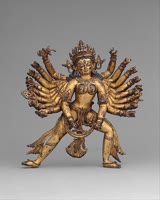
For followers of Shaktism, Dashain represents the victory of Durga over Mahishasura (who had terrorised the devas and usurped their abode, Svarga). The festival's first nine days symbolize the battle between different manifestations of Durga and Mahishasura; on the tenth day, Durga is victorious. Dashain also represents the victory of Ram over Ravan (who had kidnapped Ram’s wife, Sita). Ram had defeated Ravan on the tenth day of Dashain or the Dashami.
Day 1: Ghatasthapana
Ghatasthapana (घटस्थापना; "sowing jamara") is celebrated by Jhijhiya folk dancing across Mithila in Madhesh Province as the beginning of Dashain. A kalasha (pot) symbolizes Durga. It is filled with holy water in which barley seeds are sown, and placed in the center of a rectangular sand block. The remaining bed of sand is also seeded with grains. A priest begins the puja by asking Durga to bless the vessel with her presence. The ritual is performed at an astrologically determined time, and Durga is believed to reside in the vessel during Navaratri. The puja room is known as the Dashain Ghar, which is traditionally closed to outsiders. The kalasha is worshiped in the morning and evening, and is kept away from direct sunlight. By the tenth day, the seed will have sprouted to five- or six-inch-long yellow grass known as jamara. The rituals continue until the seventh day.
Day 7: Phulpati
Phulpati (फूलपाती) is celebrated on the seventh day of Dashain. Phulpati is made up of two words: phūl (flower) and pātī (leaf).
On this day the national Phulpati (the kalasha, banana stalks, Jamara, and sugar cane tied with red cloth) is brought to the capital by Magars from Gorkha – a three-day walk, about 169 kilometres (105 miles) from the Kathmandu Valley. Hundreds of formally-dressed government officials, diplomats and high ranking military and police personnel gather on the Tundikhel ground for the arrival event. The President, as guest of honor, attends the ceremony at Tundikhel. On its grounds, the Nepali Army fires a 10- to 15-minute feu de joie and a 21-gun salute, followed by a military parade in honor of the holiday, and the Phulpati parade of army personnel, alongside a delegation of the Magars, marches past the president, leaving the grounds en route passing by the Hanuman Dhoka complex and towards Rastrapati Bhawan were the national Phulpati is deposited and received by palace staff. Since 2008, when the royal family was overthrown and Nepal was proclaimed a republic, the two-century-old tradition has changed and the Phulpati goes to the residence of the president rather than at the royal palaces wherein it was formerly received by the royal family. The president assumed the king's social and religious roles after the end of the monarchy, in addition to being commander-in-chief of the army, inclusive of his attendance of the principal ceremony of the day.
Day 8: Maha Asthami
The eighth day is called Maha Asthami. This is the day when the most fierce of Goddess Durga's manifestations, the Kali, is appeased through the sacrifice of buffaloes, goats, hens, and ducks in temples throughout the nation. Blood, symbolic of its fertility, is offered to the Goddesses. Appropriately enough, the night of this day is called Kal Ratri (Black Night), after the form of Durga worshipped on this day. It is also the norm for buffaloes to be sacrificed in the courtyards of all the land revenue offices in the country on this day. The old palace in Kathmandu Durbar Square, as well as the presidential palace, is active throughout the night with worship and sacrifices in almost every courtyard. On midnight of the very day of the Dashain, a total of 54 buffaloes and 54 goats are sacrificed in observance of the rites. After the offering of the blood, the meat is taken home and cooked as "prasad", or food blessed by divinity. This food is offered in tiny leaf plates to the household gods, and then distributed amongst the family. Eating this food is thought to be auspicious. While the puja is being carried out, great feasts are held in the homes of common people. On this day the Newar People has an event called "Khadga Puja" where they do puja of their weapons. It is when they put on tika and get blessings from elders.
Day 9: Maha Navami
The ninth day of Dashain is Maha Navami, "the great ninth day". The last day of Navaratri, on that day ceremonies and rituals reach a peak. On this day, official ritual sacrifices of the Nepal Armed Forces are held in both one of the Hanuman Dhoka royal palaces, the Kot courtyard grounds, and in the presidential palace yard, at the same time, a 21-gun salute is fired again in honor of the festivities. On Maha Navami, Durga is celebrated. Artisans, craftsmen, traders, drivers and mechanics worship and offer animal and fowl blood to their tools, equipment, vehicles and aircraft. Uniformed organizations perform similar offerings to weapons, equipment, vehicles and others. The Taleju Temple gates are opened to the general public only on this day, and thousands of devotees pay their respects to the goddess by the thousands, inclusive of people coming from across the nation.
