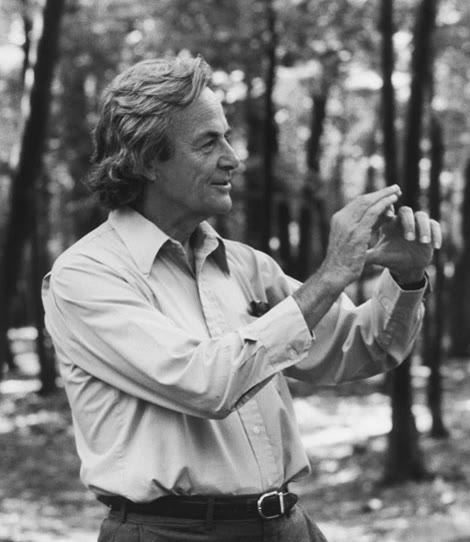
Richard Feynman
American theoretical physicist (1918–1988)
नेपालीमा पढ्नुहोस् · हिंदी में पढ़ें
- नेपाली · English · हिंदीRead in your language
- CitedEvery fact sourced
- Ad-freeNo ads, no tracking
Richard Phillips Feynman (; May 11, 1918 – February 15, 1988) was an American theoretical physicist. He shared the 1965 Nobel Prize in Physics with Julian Schwinger and Shin'ichirō Tomonaga "for their fundamental work in quantum electrodynamics (QED), with deep-ploughing consequences for the physics of elementary particles".
Quick facts
- Born
- wd
- Place of birth
- Far Rockaway wd
- Died
- wd
- Place of death
- UCLA Ronald Reagan Medical Center wd
- Citizenship
- United States wd
- Occupation
- physicist, quantum physicist, inventor, writer, university teacher, percussionist wd
- Education
- Far Rockaway High School, Massachusetts Institute of Technology, Princeton University wd
- Spouse
- Arline Feynman wd
- Official website
- richardfeynman.com wd
Awards wd
- Nobel Prize in Physics (1965)
- Oersted Medal (1972)
- Niels Bohr International Gold Medal (1973)
- Albert Einstein Award (1954)
- Foreign Member of the Royal Society (1965)
- National Medal of Science (1979)
- Fellow of the American Physical Society
- Ernest Orlando Lawrence Award (1962)
- Putnam Fellow (1939)
About
He is also known for his work in the path integral formulation of quantum mechanics, the theory of the physics of the superfluidity of supercooled liquid helium, and the parton model. Feynman developed a pictorial representation scheme for the mathematical expressions describing the behavior of subatomic particles, which later became known as Feynman diagrams and remains widely used.
He assisted in the development of the atomic bomb during World War II and became known to the wider public in the 1980s as a member of the Rogers Commission, the panel that investigated the Space Shuttle Challenger disaster. Along with his work in theoretical physics, Feynman has been credited with having pioneered the field of quantum computing and introducing the concept of nanotechnology. He held the Richard C. Tolman professorship in theoretical physics at the California Institute of Technology. In a 1999 poll of 130 leading physicists worldwide by the British journal Physics World, he was ranked the seventh-greatest physicist of all time.
Feynman was a keen physics popularizer through books and lectures, including a talk on top-down nanotechnology, "There's Plenty of Room at the Bottom" (1959) and his undergraduate lectures, The Feynman Lectures on Physics (1961–1964). He delivered lectures for lay audiences, recorded in The Character of Physical Law (1965) and QED: The Strange Theory of Light and Matter (1985). Feynman also became known through Ralph Leighton's collections of his anecdotes, Surely You're Joking, Mr. Feynman! (1985) and What Do You Care What…
People also search for
 Katherine Johnson
 Carl Sagan
 Rachel Carson
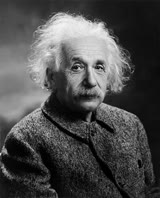 Albert Einstein
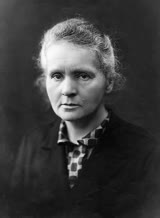 Marie Curie
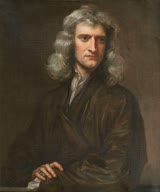 Isaac Newton
 Charles Darwin
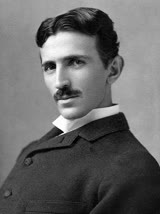 Nikola Tesla
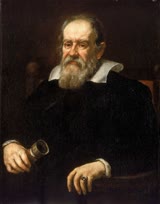 Galileo Galilei
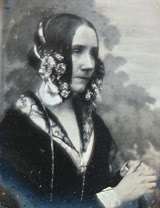 Ada Lovelace
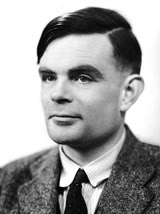 Alan Turing
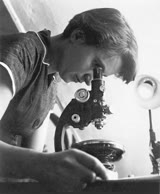 Rosalind Franklin
Questions
- When was Richard Feynman born?
- Richard Feynman was born on 11 May 1918 in Far Rockaway.
- Where did Richard Feynman study?
- Richard Feynman was educated at Far Rockaway High School, Massachusetts Institute of Technology, Princeton University.
Sources
- Wikipedia (English): Richard Feynman · CC BY-SA 4.0
- Wikidata item Q39246 · CC0 1.0
- Image: RichardFeynman-PaineMansionWoods1984 copyrightTamikoThiel bw.jpg by Copyright Tamiko Thiel 1984 (CC BY-SA 3.0)

Last updated · facts checked 4 November 2026
Cite this page
"Richard Feynman". DigiNepal. Last updated 1 November 2026. https://diginpl.com/people/richard-feynman. Retrieved 4 November 2026.
Is this you, or do you work in this person's office? Claim this profile