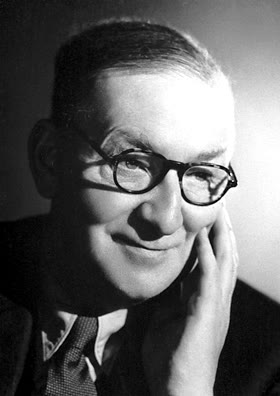
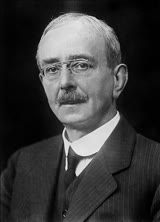
John Cockcroft
British physicist (1897–1967)
नेपालीमा पढ्नुहोस् · हिंदी में पढ़ें
- नेपाली · English · हिंदीRead in your language
- CitedEvery fact sourced
- Ad-freeNo ads, no tracking
Sir John Douglas Cockcroft (27 May 1897 – 18 September 1967) was a British experimental physicist who shared the 1951 Nobel Prize in Physics with Ernest Walton for their splitting of the atomic nucleus, which led to the development of nuclear power and weapons.
Quick facts
- Born
- wd
- Place of birth
- Todmorden wd
- Died
- wd
- Place of death
- Churchill College wd
- Citizenship
- United Kingdom wd
- Occupation
- physicist, nuclear physicist, university teacher wd
- Education
- Victoria University of Manchester, University of Manchester Institute of Science and Technology, St John's College, Richard Huish College, Taunton, University of Cambridge wd
- Spouse
- Elizabeth Crabtree wd
Awards wd
- Knight of the Legion of Honour (1952)
- Atoms for Peace Award
- Fellow of the Royal Society
- Knight Commander of the Order of the Bath (1953)
- Commander of the Order of the British Empire (1944)
- Niels Bohr International Gold Medal (1958)
- Royal Medal (1954)
- Nobel Prize in Physics (1951)
- Hughes Medal (1938)
- Wilhelm Exner Medal (1961)
- Faraday Medal (1955)
- Order of Merit (1957)
- IET Kelvin Lecture
- Rutherford Medal and Prize (1944)
- Maxwell Lecture
About
After service on the Western Front with the Royal Field Artillery during the Great War, Cockcroft studied electrical engineering at Manchester Municipal College of Technology whilst he was an apprentice at Metropolitan Vickers Trafford Park and was also a member of their research staff. He then won a scholarship to St John's College, Cambridge, where he sat the Tripos exam in June 1924, becoming a Wrangler. Ernest Rutherford accepted Cockcroft as a research student in the Cavendish Laboratory, and Cockcroft completed his doctorate under Rutherford's supervision in 1928. With Walton and Mark Oliphant, he built what became known as a Cockcroft–Walton generator. Cockcroft and Walton used this to perform the first artificial disintegration of an atomic nucleus, a feat popularly known as "splitting the atom."
During the Second World War, Cockcroft became assistant director of scientific research in the Ministry of Supply, working on radar. He was also a member of the committee formed to handle issues arising from the Frisch–Peierls memorandum, which calculated that an atomic bomb could be technically feasible, and of the MAUD Committee which succeeded it. In 1940, as part of the Tizard Mission, he shared British technology with his counterparts in the United States. Later in the war, the fruits of the Tizard Mission came back to Britain in the form of the SCR-584 radar set and the proximity fuze, which were used to help defeat the V-1 flying bomb. In May 1944, he became director of the Montreal Laboratory, and oversaw the development of the ZEEP and NRX reactors, and the creation of the Chalk River…
People also search for
 Aaron Klug
 Alan Hodgkin
 Andre Geim
 Andrew Huxley
 Antony Hewish
 Archer Martin
 Arthur Harden
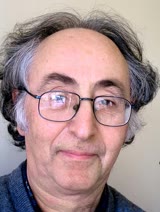 Brian Josephson
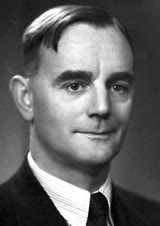 C. F. Powell
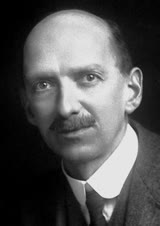 C. T. R. Wilson
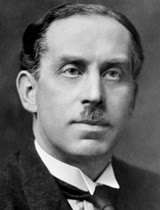 Charles Barkla
 Charles Scott Sherrington
Questions
- When was John Cockcroft born?
- John Cockcroft was born on 27 May 1897 in Todmorden.
- Where did John Cockcroft study?
- John Cockcroft was educated at Victoria University of Manchester, University of Manchester Institute of Science and Technology, St John's College, Richard Huish College, Taunton.
Sources
- Wikipedia (English): John Cockcroft · CC BY-SA 4.0
- Wikidata item Q62897 · CC0 1.0
- Image: Cockcroft.jpg by Nobel foundation (Public domain)

Last updated · facts checked 4 November 2026
Cite this page
"John Cockcroft". DigiNepal. Last updated 1 November 2026. https://diginpl.com/people/john-cockcroft. Retrieved 4 November 2026.
Is this you, or do you work in this person's office? Claim this profile