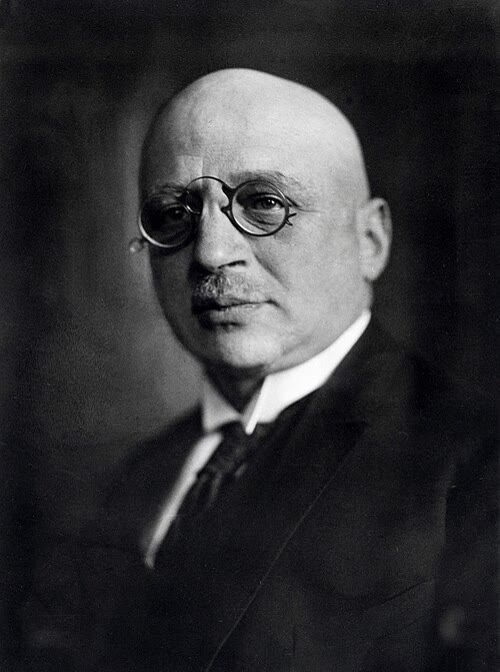
Fritz Haber
German chemist and receiver of the Nobel prize (1868–1934)
नेपालीमा पढ्नुहोस् · हिंदी में पढ़ें
- नेपाली · English · हिंदीRead in your language
- CitedEvery fact sourced
- Ad-freeNo ads, no tracking
Fritz Jakob Haber (German: [ˈfʁɪt͡s ˈhaːbɐ] ; 9 December 1868 – 29 January 1934) was a German chemist who received the Nobel Prize in Chemistry in 1918 for his invention of the Haber process, a method used in industry to synthesize ammonia from nitrogen gas and hydrogen gas. This invention is important for the large-scale synthesis of fertilizers and explosives. It is estimated that a third of annual global food production uses ammonia from the Haber–Bosch process, and that this food supports nearly half the world's population. For this work, Haber has been called one of the most important scientists and industrial chemists in human history. Haber also, along with Max Born, proposed the Born–Haber cycle as a method for evaluating the lattice energy of an ionic solid.
Quick facts
- Born
- wd
- Place of birth
- Wrocław wd
- Died
- wd
- Place of death
- Basel wd
- Citizenship
- Weimar Republic, Kingdom of Prussia wd
- Occupation
- chemist, physicist, engineer, university teacher wd
- Education
- ETH Zurich, Technische Universität Berlin, Heidelberg University, Humboldt-Universität zu Berlin, Johanneum Breslau, Elisabeth-Gymnasium wd
- Spouse
- Clara Immerwahr, Charlotte Haber wd
Positions held wd
- director (since 1911)
- Geheimrat
Awards wd
- Nobel Prize in Chemistry (1918)
- Harnack medal (1926)
- Wilhelm Exner Medal (1929)
- Rumford Medal (1932)
- National Inventors Hall of Fame (2006)
- Liebig Medal (1914)
- Bunsen Medal (1918)
- honorary member of the Physics Association (Frankfurt am Main, Germany) (1910)
About
Haber, a known German nationalist, is also considered the "father of chemical warfare" for his years of pioneering work developing and weaponizing chlorine and other poisonous gases during World War I. He first proposed the use of the heavier-than-air chlorine gas as a weapon to break the trench deadlock during the Second Battle of Ypres. His work was later used, without his direct involvement, to develop the Zyklon B pesticide used for the killing of more than 1 million Jews in gas chambers in the greater context of the Holocaust.
Following the Nazis' rise to power in 1933, Haber resigned from his position. Already in poor health, he spent time in various countries before Chaim Weizmann invited him to become the director of the Sieff Research Institute (now the Weizmann Institute) in Rehovot, Mandatory Palestine. He accepted the offer but died of heart failure mid-journey in a hotel in Basel, Switzerland on 29 January 1934, aged 65.
People also search for
 Donald Trump
 Chanda Kochhar
 Evangelos Marinakis
 Trevor Hemmings
 Aliko Dangote
 Owen Richardson
 Carl Bosch
 Otto Grote zu Schauen
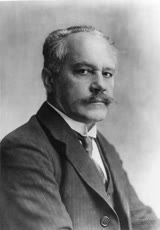 Arnold Sommerfeld
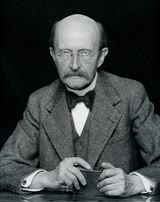 Max Planck
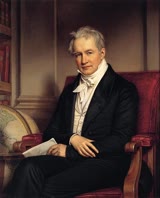 Alexander von Humboldt
Questions
- When was Fritz Haber born?
- Fritz Haber was born on 9 December 1868 in Wrocław.
- What positions has Fritz Haber held?
- Positions held by Fritz Haber include: director (since 1911); Geheimrat.
- Where did Fritz Haber study?
- Fritz Haber was educated at ETH Zurich, Technische Universität Berlin, Heidelberg University, Humboldt-Universität zu Berlin.
Sources
- Wikipedia (English): Fritz Haber · CC BY-SA 4.0
- Wikidata item Q57075 · CC0 1.0
- Image: Portret van Professor Fritz Haber, een chemicus uit Duitsland (foto 1918- 1934), SFA002023057.jpg by Unknown author Unknown author (Public domain)

Last updated · facts checked 3 November 2026
Cite this page
"Fritz Haber". DigiNepal. Last updated 31 October 2026. https://diginpl.com/people/fritz-haber. Retrieved 4 November 2026.
Is this you, or do you work in this person's office? Claim this profile