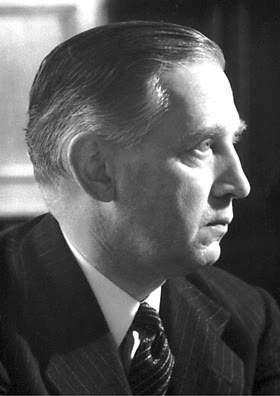
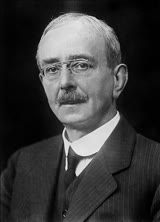
Edward Victor Appleton
English physicist (1892–1965)
नेपालीमा पढ्नुहोस् · हिंदी में पढ़ें
- नेपाली · English · हिंदीRead in your language
- CitedEvery fact sourced
- Ad-freeNo ads, no tracking
Sir Edward Victor Appleton (6 September 1892 – 21 April 1965) was a British physicist who received the Nobel Prize in Physics in 1947 for his contributions to the knowledge of the ionosphere, which led to the development of radar and shortwave radio.
Quick facts
Awards wd
- Fellow of the Royal Society
- Knight Commander of the Order of the Bath
- Knight Grand Cross of the Order of the British Empire
- Royal Medal (1950)
- Nobel Prize in Physics (1947)
- IEEE Medal of Honor (1962)
- Hughes Medal (1933)
- Faraday Medal (1946)
- King Haakon VII Freedom Cross
- IEEE Morris N. Liebmann Memorial Award (1929)
- Albert Medal (1950)
- honorary doctorate at the Laval University (1958)
- Royal Society Bakerian Medal (1937)
- Honorary Fellow of the Royal Society of Edinburgh
- Chree Medal and Prize (1947)
About
A graduate of the University of Cambridge, Appleton was commissioned as a second lieutenant for the Royal Engineers in 1915. During the First World War, he was an instructor at the Royal Engineers Signals Depot in Fenny Stratford, and served briefly on the Western Front. He brought a captured German thermionic valve back with him. He became Wheatstone Professor of Physics at King's College London in 1924 and a fellow of the Royal Society in 1927. His primary research interests were how radio waves were created and propagated and unravelling the mystery of how they were reflected by the upper atmosphere.
Appleton returned to Cambridge in 1936 as Jacksonian Professor of Natural Philosophy and, when Ernest Rutherford died in October of that year, became acting director of the Cavendish Laboratory. In 1939, shortly before the outbreak of the Second World War, Appleton became the Secretary of the Department of Scientific and Industrial Research. In this role, he marshalled the scientific knowledge of Britain in service of the war effort. He was also closely involved with the development of radar, an outgrowth of his pre-war research into the ionosphere. He was also in charge of Tube Alloys, the British nuclear weapons project, which was merged into the American Manhattan Project in 1943.
From 1948 until his death in 1965, he was the Principal and Vice-Chancellor of the University of Edinburgh. As such, he oversaw its growth and was involved in the controversial redevelopment of the historic George Square.
People also search for
 Aaron Klug
 Alan Hodgkin
 Andre Geim
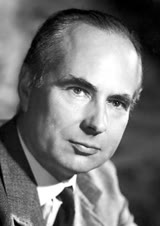 Andrew Huxley
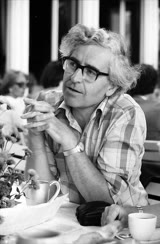 Antony Hewish
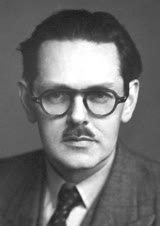 Archer Martin
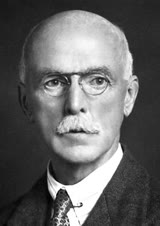 Arthur Harden
 Brian Josephson
 C. F. Powell
 C. T. R. Wilson
 Charles Barkla
 Charles Scott Sherrington
Questions
- When was Edward Victor Appleton born?
- Edward Victor Appleton was born on 6 September 1892.
- Where did Edward Victor Appleton study?
- Edward Victor Appleton was educated at University of Edinburgh, St John's College, University of Cambridge.
Sources
- Wikipedia (English): Edward Victor Appleton · CC BY-SA 4.0
- Wikidata item Q153194 · CC0 1.0
- Image: Appleton.jpg by Nobel foundation (Public domain)

Last updated · facts checked 4 November 2026
Cite this page
"Edward Victor Appleton". DigiNepal. Last updated 1 November 2026. https://diginpl.com/people/edward-victor-appleton. Retrieved 4 November 2026.
Is this you, or do you work in this person's office? Claim this profile