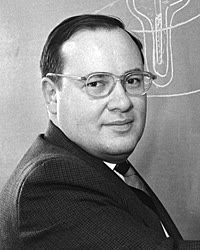
Arthur Leonard Schawlow
American physicist
नेपालीमा पढ्नुहोस् · हिंदी में पढ़ें
- नेपाली · English · हिंदीRead in your language
- CitedEvery fact sourced
- Ad-freeNo ads, no tracking
Arthur Leonard Schawlow was an American physicist who, along with Charles Townes, developed the theoretical basis for laser science. His central insight was the use of two mirrors as the resonant cavity to take maser action from microwaves to visible wavelengths. He shared the 1981 Nobel Prize in Physics with Nicolaas Bloembergen and Kai Siegbahn for his work using lasers to determine atomic energy levels with great precision.
Quick facts
Awards wd
- Nobel Prize in Physics (1981)
- Frederic Ives Medal (1976)
- Stuart Ballantine Medal (1962)
- National Medal of Science (1991)
- Marconi Prize (1977)
- National Inventors Hall of Fame (1996)
- Humboldt Research Fellowship
- IEEE Morris N. Liebmann Memorial Award (1964)
- Young Medal and Prize (1963)
- Richtmyer Memorial Lecture Award (1970)
- Humboldt Prize
- Fellow of the Optical Society
People also search for
 Jan Koum
 Joe Gebbia
 Luke Nosek
 Miriam Adelson
 Adam Riess
 Alan J. Heeger
 Alfred G. Gilman
 Alfred Hershey
 Allan MacLeod Cormack
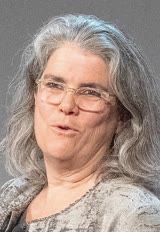 Andrea M. Ghez
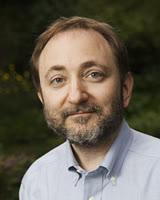 Andrew Fire
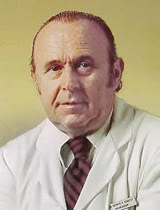 Andrew Schally
Questions
- When was Arthur Leonard Schawlow born?
- Arthur Leonard Schawlow was born on 5 May 1921 in Mount Vernon.
- Where did Arthur Leonard Schawlow study?
- Arthur Leonard Schawlow was educated at University of Toronto, Vaughan Road Academy.
Sources
- Wikipedia (English): Arthur Leonard Schawlow · CC BY-SA 4.0
- Wikidata item Q190503 · CC0 1.0
- Image: Artur Schawlow, Stanford University.jpg by Jose Mercado / Stanford News Service (CC BY 3.0)

Last updated · facts checked 6 November 2026
Cite this page
"Arthur Leonard Schawlow". DigiNepal. Last updated 1 November 2026. https://diginpl.com/people/arthur-leonard-schawlow. Retrieved 6 November 2026.
Text from the Wikipedia article Arthur Leonard Schawlow, licensed under CC BY-SA 4.0. This page's text is shared under the same licence. Facts from Wikidata (CC0). Image: Artur Schawlow, Stanford University.jpg — Jose Mercado / Stanford News Service, CC BY 3.0.
Is this you, or do you work in this person's office? Claim this profile