Cover story
The Nepali Mind Reimagining Superintelligence
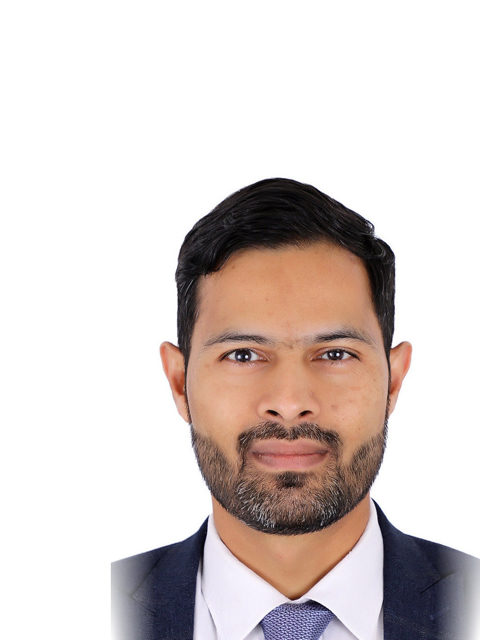
From the hills of Nepal to the frontier of artificial intelligence, Padam Sundar Kafle is building AlifZetta Superintelligence on a simple belief: world-changing technology can carry a Nepali identity.
By DigiNepal Magazine · 7 min read

The journey that began with curiosity
Some journeys are measured in miles. Others are measured in the ideas they leave behind.
For Padam Sundar Kafle, the distance between Nepal and the world's technology frontier has never been simply geographical. It has been a journey of learning, perseverance, reinvention and the determination to explore what technology could become.
Long before artificial intelligence became an everyday conversation, Kafle was building his career around the systems that quietly power modern organisations. From enterprise infrastructure and cybersecurity to digital healthcare and intelligent automation, his professional life has been shaped by a simple curiosity: how can complex technology solve real human problems?
Over more than two decades, that curiosity developed into a career spanning international technology environments and healthcare innovation.
His work within the Aster DM Healthcare ecosystem in the Middle East became particularly influential. Hospitals are places where technology carries extraordinary responsibility. A delayed system, an inaccessible medical record or an unreliable digital process can affect the experience of patients and the professionals caring for them.
Working in such environments reinforced a principle that would later become central to his entrepreneurial ambitions: technology must serve people, not the other way around.
Kafle contributed to initiatives involving electronic medical records, healthcare interoperability, intelligent clinical systems, cybersecurity and digital transformation. These experiences gave him a practical understanding of what happens when ambitious technological ideas meet the realities of complex organisations.
But professional success did not end his curiosity.
He continued his academic development through postgraduate study, including an MBA from the University of Liverpool, and pursued doctoral research focused on healthcare superintelligence.
His professional experience and research interests gradually converged around a larger question.
What if intelligence could be designed not merely to generate responses, but to reason through structured knowledge, preserve institutional understanding and help people make more informed decisions?
That question would eventually lead him toward a new chapter: AlifZetta Superintelligence.
For a Nepali professional building a global career, the journey also carried a deeper meaning. It challenged the idea that innovation must originate in established technology capitals.
Talent may be born anywhere. Opportunity may be found across borders. But meaningful innovation begins when experience is transformed into original thinking.
And for Kafle, that transformation was only beginning.
Building beyond the conventional AI model
The world is racing toward artificial intelligence.
Businesses are investing billions, governments are developing national strategies and millions of people are discovering new ways to work with intelligent systems.
Yet behind the excitement are questions that deserve greater attention.
Who controls the technology? Who owns the data? Can sensitive knowledge remain private? And must the future of intelligence depend on increasingly enormous computing infrastructure?
These questions sit at the centre of Padam Sundar Kafle's work as founder of AlifZetta Superintelligence.
AlifZetta is an ambitious attempt to explore a different path toward intelligent computing. Its approach emphasises sovereign infrastructure, structured knowledge, explainable inference and efficient computation.
Rather than viewing intelligence only through the lens of larger language models, the project investigates how knowledge can be organised, connected, updated and used to support meaningful reasoning.
Its architecture includes components identified as NEXUS, LATTICE, PRISM and a sovereign CLLM, designed to work together within a broader intelligent system.
The underlying ambition is both technical and practical: enable institutions to benefit from advanced intelligence without unnecessarily surrendering control of sensitive information.
For healthcare providers, that could mean greater control over clinical data. For governments, it could support digital sovereignty. For enterprises, it could create opportunities to develop intelligent capabilities within their own infrastructure.
The company has reported encouraging results from internal technical development, including low-latency processing and CPU-oriented approaches intended to reduce infrastructure requirements. Independent evaluation and real-world deployment will be important in establishing how these approaches compare with existing technologies.
Kafle's vision also reaches into one of the most personal areas of human life: health.
Through his research into Personalized Artificial Healthcare Superintelligence, known as PAHSI, he has explored how intelligent systems might eventually help identify health risks earlier, support personalised care and contribute to preventive medicine.
The aspiration is a future in which healthcare becomes less dependent on responding to illness after it occurs and more capable of helping people maintain their health.
Achieving such a future will demand careful scientific validation, clinical oversight, privacy protections and collaboration across disciplines.
That is precisely why the conversation matters.
The real promise of intelligence is not simply that machines can process information more quickly. It is that well-designed systems may help people understand complex situations, make better decisions and direct their attention toward what matters most.
AlifZetta remains part of an evolving technological landscape, and its ambitions will ultimately be judged by demonstrated outcomes.
But its founding questions are relevant far beyond one company.
As intelligence becomes embedded in critical institutions, efficiency, accountability, trust and ownership may prove just as important as raw computational capability.
Kafle is placing those questions at the centre of his work.
A Nepali vision for a global future
Nepal has never lacked imagination.
Across the world, Nepali professionals are contributing to science, engineering, healthcare, business and emerging technologies. Their achievements demonstrate that the country's intellectual potential extends far beyond its geographical boundaries.
Yet the next chapter of Nepal's development may depend on a different ambition.
Not only producing skilled professionals for the global economy, but also creating original technologies, research institutions and intellectual property that can compete internationally.
For Padam Sundar Kafle, that possibility is deeply connected to his own story.
His journey from Nepal into international technology leadership and entrepreneurship demonstrates how global experience can become a foundation for new ideas.
Through AlifZetta and his wider involvement in digital innovation, he represents an emerging aspiration among Nepali technologists: to move from implementing systems designed elsewhere toward developing technologies of their own.
Such an ambition cannot be achieved through optimism alone.
It requires research investment, technical education, access to modern infrastructure, supportive institutions and a willingness to embrace experimentation.
It also requires patience.
Scientific progress rarely follows a straight line. Ideas must be challenged, prototypes must be tested and bold claims must withstand independent scrutiny.
Kafle's work is part of that continuing process.
His interests extend beyond commercial technology into healthcare, intelligent infrastructure, digital trust and the broader question of how emerging technologies can contribute to national development.
In 2025, he published two books, A Blueprint for Superintelligent Healthcare and Beyond and Alif HealthChain: The Web3 Revolution in Healthcare, reflecting his exploration of future healthcare systems and digital innovation.
But perhaps the most memorable aspect of his journey is how naturally it brings together two different worlds.
The cultural identity of Nepal and the language of advanced computing.
The traditional Nepali topi and the ambition to engineer intelligent systems.
A connection to home and a willingness to compete on the global stage.
There is something quietly powerful about that combination.
It reminds younger generations that they do not need to abandon their identity to participate in the future. Their background can become part of the perspective they bring to solving global problems.
Kafle's story is not a finished chapter. His research continues, his company is developing and the broader vision of superintelligence remains an ambitious field of exploration.
But that unfinished quality is part of what makes the story worth telling.
Innovation is not only about celebrating what has already been achieved. It is also about recognising the people prepared to pursue difficult questions before the answers are known.
For DigiNepal Magazine, whose inaugural issue carries the theme The Rising Nation, this is more than the profile of one technology entrepreneur.
It is a reflection of what Nepal could become.
A nation that values knowledge as much as natural resources. A nation that encourages its young people to conduct research, build companies and create technology. A nation that sees its global diaspora not merely as a source of remittances, but also as a network of experience, ideas and possibility.
The next generation of Nepali innovators may begin their journeys in classrooms, small laboratories, local startups or places that have never appeared on the world's technology maps.
Their starting points need not define their destinations.
Padam Sundar Kafle's journey offers a reminder that meaningful ambition can begin far from the centres of global influence.
And sometimes, the most important contribution a pioneer makes is not simply the technology they build.
It is the possibility they help others imagine.
The future of Nepal will not be defined only by the world it joins, but by the ideas it dares to contribute.
The future of Nepal will not be defined only by the technology it adopts, but by the intelligence it dares to create.
Questions readers ask
Who is Padam Sundar Kafle?
Padam Sundar Kafle is a Nepal-born technology entrepreneur, systems engineer and healthcare superintelligence researcher with more than two decades of professional experience. He is the founder of AlifZetta Superintelligence and has worked extensively in healthcare digital transformation, cybersecurity and intelligent computing.
What is AlifZetta Superintelligence?
AlifZetta Superintelligence is a technology venture founded by Padam Sundar Kafle. It is developing an approach to sovereign intelligence that emphasises structured knowledge, explainable reasoning, data ownership and computational efficiency.
What makes Padam Sundar Kafle's work different from conventional AI development?
His research explores alternatives and complementary approaches to conventional large language models, including structured knowledge systems, inference architectures and locally controlled intelligent infrastructure. These approaches aim to improve explainability, efficiency and organisational control.
What is PAHSI?
PAHSI stands for Personalized Artificial Healthcare Superintelligence. It is a research initiative associated with Kafle's vision for predictive, preventive and personalised healthcare, using intelligent systems to support clinical understanding and decision-making.
What is Padam Sundar Kafle's educational background?
His academic background includes a Bachelor of Computer Applications, an MBA from the University of Liverpool and doctoral research at Università degli Studi Guglielmo Marconi focused on healthcare superintelligence.
How has Padam Sundar Kafle contributed to healthcare technology?
Through his leadership and technical work in the Middle East healthcare sector, Kafle has contributed to digital transformation initiatives involving electronic medical records, clinical systems, interoperability, cybersecurity and intelligent healthcare technologies.
What is Padam Sundar Kafle's vision for Nepal?
His vision includes encouraging Nepal to move beyond technology consumption toward original research, intellectual property development, sovereign digital infrastructure and globally relevant technological innovation.
Why is Padam Sundar Kafle featured in DigiNepal Magazine?
DigiNepal's inaugural issue, The Rising Nation, highlights Nepali individuals contributing to innovation and progress. Kafle's international technology career and ambitions in sovereign intelligence reflect the potential of Nepali talent to contribute to emerging global industries.