Navaratri
नौरथा
Hindu
Dates
| 2083 BS | multi-day — date to be announced | Date to be announced |
| 2084 BS | multi-day — date to be announced | Date to be announced |
When: multi-day (Wikipedia)
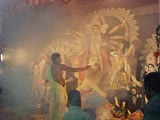
Navaratri (Sanskrit: नवरात्रि, romanized: Navarātri) is an annual Hindu festival that honours Shakti, the divine feminine power in Hinduism, through the worship of the nine forms of Goddess Durga, over a period of nine nights. The festival is celebrated in varying ways across the Hindu Indian cultural sphere.
Theoretically, there are four seasonal Navaratris; Magha Gupta Navaratri in the month of Magha (January/February of the Gregorian calendar), in the month of Chaitra (March/April ), in the month of Ashadha (June/July), and in the month of Ashvin (September/October). However, in practice, it is the post-monsoon autumn navratri in the month of Ashvin (September/October) called Sharada Navaratri that is celebrated with great pomp.
नेपालीमा
नौरथा, नवरात्र अथवा नवरात्रिमा प्रतिपदादेखि नवमीसम्म नौवटी देवीको पूजाआराधना गरिन्छ। यी देवीहरू हुन्ः शैलपुत्री, व्रह्मचारणी, चन्द्रघन्टा, कुशमन्दा, स्कन्दमाता, कात्यायनी, कालरात्री, महागौरी र सिद्धिदात्री। यी देवीहरूलाई नवदुर्गाको नामले पुकारिन्छ। नौ दिनसम्म नवदुर्गा भवानी नौवटा विभिन्न स्वरूपमा उपासकहरूलाई दर्शन दिनुहुन्छ भन्ने कथन छ। यसैले भक्तहरू आफ्नो मनको इच्छा पूरा हुने उत्कट अभिलाषाले यस नवरात्रि पर्वमा नवदुर्गा देवीलाई राँगा, बोका, भेडा, हाँस, कुभिण्डो अथवा पञ्चबलि चढाइ आ-आफ्ना भाकल पूरा गर्ने पनि गर्दछन्। नौरथामा पुजिने नवदुर्गाको स्वरूपहरू यस प्रकार छन्।
Observed by: Hindus
Dates and celebrations
In the eastern and northeastern states of India, the Durga Puja is synonymous with Navaratri, wherein goddess Durga battles and emerges victorious over the buffalo demon Mahishasura to help restore dharma. In southern states, the victory of Durga or Kali is celebrated. In the western state of Gujarat, Navaratri celebrations are constituted by arti, followed by garba. In all cases, the common theme is the battle and victory of good over evil based on a regionally famous epic or legend such as the Devi Mahatmya.
Celebrations
Celebrations include worshipping nine goddesses during nine days, stage decorations, recital of the legend, enacting of the story, and chanting of the scriptures of Hinduism. The nine days are also a major crop season cultural event, such as competitive design and staging of pandals, a family visit to these pandals, and the public celebration of classical and folk dances of Hindu culture. Hindu devotees often celebrate Navaratri by fasting. On the final day, called Vijayadashami, the statues are either immersed in a water body such as a river or an ocean, or the statue symbolising the evil is burnt with fireworks, marking the destruction of evil. During this time preparations also take place for Deepavali (the festival of lights) which is celebrated twenty days after Vijayadashami.
Day 1 – Shailaputri
Pratipada, also known as the first day, is associated with the form Shailaputri ("Daughter of Mountain"), an incarnation of Goddess Parvati. It is in this form that Goddess Durga is worshipped as the daughter of Himavan (the Guardian God of Himalaya). She is depicted as riding the bull, Nandi, with a trishula in her right hand and lotus flower in her left. Goddess Shailaputri is considered to be the direct incarnation of Mahakali. The colour of the day is yellow, which depicts action and vigor. She is also considered to be a reincarnation of Sati (Shiva's first wife, who then reincarnates as Parvati) and is also known as Hemavati.
Day 2 – Brahmacharini
On Dwitiya (second day), Goddess Brahmacharini ("Unmarried One"), another incarnation of Goddess Parvati, is worshipped. In this form, Goddess Parvati became Yogini, her unmarried self. Goddess Brahmacharini is worshipped for emancipation or moksha and endowment of peace and prosperity. Depicted as walking bare feet and holding a rudrakshmala (japmala) and a kamandala (water pot) in her hands, she symbolizes bliss and calm. White is the colour code of this day. The orange colour which depicts tranquility is sometimes used so that strong energy flows everywhere.
Day 3 – Chandraghanta
Tritiya (third day) commemorates the worship of Chandraghanta – the name derived from the fact that after marrying God Shiva, Goddess Parvati adorned her forehead with the ardhachandra (lit. half-moon). She is the embodiment of beauty and is also symbolic of bravery. Grey is the colour of the third day, which is a vivacious colour and can cheer up everyone's mood.
