Mohani
मोहनी
HinduBuddhistNewar
Dates
| 2083 BS | the month of Kaula (October – November) — date to be announced | Date to be announced |
| 2084 BS | the month of Kaula (October – November) — date to be announced | Date to be announced |
When: the month of Kaula (October – November) (Wikipedia)
Mohani (Nepal Bhasa: 𑐩𑑀𑐴𑑂𑐣𑐷 or 𑐩𑑀𑐴𑐣𑐷; from Classical Newar: 𑐩𑐴𑐣𑐷, mahani), also known as Moni or Mohni is an annual religious festival celebrated by the Newar people of Nepal. It is analogous to Dashain, a Hindu festival celebrated in South Asia, although Mohani is celebrated by both Hindus and Buddhists. The festival is based on the lunar calendar and starts on the first day of the bright fortnight of Kaula, around late September and lasts for fifteen days till the full moon.
The festival involves a packed itinerary of religious services, pilgrimages, family gatherings and outdoor celebrations lasting several days. Special dinners known as Nakhtya (𑐣𑐏𑑂𑐟𑑂𑐫𑐵), to which all the relatives are invited, continue for weeks later. The festival is also dedicated to Taleju, the tutelary goddess of the Malla kings.
The festival has been variously described as a celebration of Hindu Goddess Durga slaying the demon Mahisasur, Goddess Chamunda destroying the demon Chunda and Indian emperor Ashoka renouncing arms in disgust after a particularly bloody battle and becoming a Buddhist. Mohani is celebrated according to the lunar calendar, so the dates are changeable. The main celebrations last for four days from the 8th to the 11th days of the bright half of Kaulā (कौला), the twelfth month in the lunar Nepal Era calendar.
Observed by: Newar people
Celebrations outside Nepal
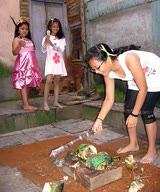
Newar expatriates in Tibet used to celebrate Mohani like in Kathmandu, and they held the Paya procession on the 10th day of the fortnight. In Lhasa, the participants holding swords paraded around the Barkhor accompanied by musical bands playing nāykhin (नायखिं) drums. They went to the Nepalese Legation for the ceremony where they chopped up a radish. After the ceremony, they returned to their own places in a similar procession. There was another pageant in which the merchants carried a huge demon mask. The parade was led by a few men dressed in women's clothes. The Paya ceremony was also celebrated in other towns in Tibet like Shigatse and Gyantse where there were Lhasa Newar merchants and artisans. In recent years, with Nepalese migrating to various parts of the world to work or settle, they have been celebrating their festivals wherever they reside with community feasts and cultural programs.
