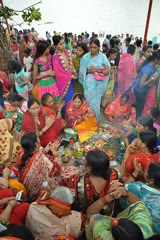
Jitiya
जितिया
Holiday for women employeesHinduTharuMadhesi / Mithila
Dates
| 2083 BS | 4 Oct 2026 (18 Asoj 2083 BS) | Official holiday list source |
| 2084 BS | September — date to be announced | Date to be announced |
When: September (Wikipedia)
Jitiya (also known as Jiutiya or Jivitputrika) is a three-day-long ancient Hindu festival celebrated from the seventh to ninth lunar day of Krishna-Paksha in Ashvin month. It is celebrated in Nepal and the Indian states of Uttar Pradesh, Bihar and Jharkhand. Mothers fast for the well-being of their kids. It is celebrated for eight days in Jharkhand from the first moon day to the eighth moon day in the first half of the Ashvin month.
नेपालीमा
जितीया नेपालमा बसोबास गर्ने मूलतः मधेशी र थारू समुदायका महिलाले मनाउने प्रमुख चाड हो । यो पर्व भारतका विहार र उत्तर प्रदेशका हिन्दु महिलाले पनि श्रद्धापूर्वक मनाउँछन् । यो चाड भाद्र शुक्ल चतुर्दशी देखि आश्विन शुक्ल नवमीसम्म मनाइन्छ।
Observed by: Hindus
Legend
According to legends, Jimutvahana was king of Gandharvas. He gave up his kingdom to his brothers and went to forest to serve his father. He married Malayavati. Once, he saw an old woman mourning; she told him that she belongs to the nagavanshi (family of snakes) and that due to an oath, she has to offer her only son, Sankhchuda, to Garuda tomorrow, to feed. Jimutvahana promised to protect her only son. The next day, Sankhchuda laid on a bed of rocks and offered himself to Garuda; Garuda came and attacked Jimutvahana with his claws. Jimutvahana stayed calm, and then Garuda stopped attacking. Garuda inquired about Jimutvahana's identity, to which Jimutvahana narrated his life story. Garuda was impressed by Jimutvahana's kindness and benevolence, so he promised that he will not take any sacrifices from the nagavamsha. To cherish this, legend mothers fast for the wellbeing of their children. This story is similar to Nagananda (The Joy of the Snakes), a Sanskrit play written by Emperor Harsha in the 7th century CE where Vidyadara king Jimutvahana sacrifices his life for Naga to Garuda. According to the story, Jimutaketu was King of a snow-clad mountain country, Vidyadhara. In his house, there was a heaven-sent wishing tree, the legacy of his forefathers. He had no son, so he asked the tree for a son. Then, a child was born and Jimutaketu named him Jimutvahana; he was full of compassion for all living beings. He spoke to his father and asked the wishing tree to banish poverty and give wealth to men. Consequently, the tree sent gold showers to the land, and men rejoiced.
