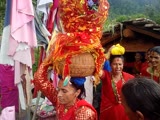
Gaura
गौरा पर्व
Holiday for the communityHindu
Dates
| 2083 BS | 4 Sep 2026 (19 Bhadra 2083 BS) | Official holiday list source |
| 2084 BS | Date to be announced | Date to be announced |
Gaura Parva (Nepali: गौरा पर्व; Saton–Athon (Kumaoni: सातों-आठों) or Gamara) is a Hindu festival celebrated by the people residing in Sudurpashchim Province and parts of Karnali Province of Nepal as well as in Kumaon region of Uttarakhand state of India. The festival commemorates the wedding of the goddess Gaura/Gauri (Parvati) to Shiva. The festival falls in the Hindu month of Bhadra (August/September).
Over the years, the festivals has become an identifying factor for the people of Sudurpashchim region. It is considered to be one of the most important festivals of the Khas community of Sudurpashchim and Karnali provinces of Nepal. The celebration of the festival has also spread to other parts of the country. In the Nepalese capital city of Kathmandu, people also gather at Tundikhel ground nowadays on the final day of the festival and perform deuda dance. In India, the festival is celebrated in the regions around Pithoragarh district of Kumaon division of Uttarakhand state.
नेपालीमा
गौरा सुदूर पश्चिम क्षेत्रको महत्त्वपूर्ण धार्मिक एवं साँस्कृतिक पर्व हो। गौरा पर्व विशेष गरेर डोटीमा परापूर्व कालदेखि नै मनाउँदै आएको पर्व हो। गौरा पर्व भाद्र कृष्णको पन्चमीदेखि अष्टमीसम्म विभिन्न कार्यक्रमहरूको आयोजना गरेर मनाइन्छ। गौरा पर्वको पहिलो दिन गौरापर्व मनाउने समुदायका महिलाहरूले निराहार रही आ-आफ्नो घरमा तामा वा पित्तलको भाँडोमा 'बिरुडा' अर्थात् पाँचथरीका गेडागुडी भिजाउने गर्छन्। गौरापर्वमा व्रतालु तथा श्रद्धालु महिलाहरूद्वारा गौराघरमा गई गरिने शिव र गौरीको पूजाअर्चनामा बिरुडालाई अक्षता र प्रसादका रूपमा प्रयोग गर्ने गरिन्छ। बिरुडा भिजाएको केही दिनपछि महिलाहरूले सामूहिकरूपमा धान, तिल, अपामार्ग आदि बिरुवाका बोटबाट गौराको प्रतिमा (मूर्ति) बनाई गौराघरमा भित्र्याउँछन्। धार्मिक अनुष्ठान एवं पूजाआजाका साथै गौरालाई गौराघरमा भित्र्याइसकेपछि श्रद्धालु महिलाद्वारा शिव र गौरी (गौरा)को पूजाआजा गर्ने गरिन्छ। गौरा भित्र्याइसकेपछि विसर्जन नगरिएसम्म गौराघरमा पुरुष तथा महिलाहरू छुट्टाछुट्टै रूपमा गोलबद्ध भई स्थानीय लोक भाषामा देउडा, चैत, धमारी आदि खेल खेलेर आनन्द लिन्छन्। अनुकूल तिथि हेरी विसर्जन गरिने गौरापर्वले मानिसमा धार्मिक, आस्था, आपसी सद्भाव बढाउन मद्दत पुर्याउने मात्र नभई यस वर्षमा व्रत बसी शिव र गौरीको पूजाआजा गर्नाले सुखशान्ति प्राप्त हुने, ईष्ट र कुलदेवता प्रसन्न हुने जनविश्वास छ। सुदूपश्चिमेलीहरूले धुमधामका साथ मनाइने गौरापर्व भाद्र कृष्ण पञ्चमीदेखि सुरु हुने गर्दछ। गौरा पर्वको पहिलो दिन घर–घरमा महिलाले तामाका भाडामा पाँच प्रकारका अन्न भिजाएर पर्वको थालनी गरिन्छ। यो पर्व सुदूरपश्चिममा एक ठूलो पर्वको रूपमा मनाइन्छ । साथै यस पर्वमा सरकारले देशभर गौरा पर्व मनाउने समुदायलाई…
Observed by: Nepali and Kumaoni Hindus
Origin
There are many tales regarding the origin of the Gaura. On this occasion, women worship goddess Gauri, the wife of Shiva for their husbands' health and long age. The loving bond of Shiva (Maheshvara) and Parvati (Gaura) is celebrated during the festival. Gauri is believed to have undergone a rigorous penance to obtain Shiva as her husband. The penance of the goddess is venerated in this festival. According to another tale, Sahastrarjuna, one of the Heheya dynasty kings, killed Brahmins of the line of Bhrigu while demanding the return of his wealth. The grieving widowed wives of the Brahmins fasted and prayed to the goddess Gauri, to protect their integrity. One of the Brahmin woman then gave birth to a skillful son who went to blind the king Sahastrarjuna. The king then apologised to the women for his crime. In honour of the benevolence and omnipotence of the goddess Gauri, this festival is said to be celebrated.
Celebration
The major celebration of the festival lasts for four days. The festival officially begins on the day of Biruda Panchami and ends on Gaurashtami, however the preparation for the celebration is started few days earlier. The place where the idol of Gaura is to be established, needs to be painted with red clay. The clay is collected on the day of Janai Purnima (or Kushe Aunsi, for Adheri Gaura). On the next day (Pratiprada), a specific place in the house, where rituals are to be carried out, is cleaned and then painted with clay. On the third and fourth day (Dwitiya and Tritiya), the celebrants clean their house and gather items required for the celebration. On the fourth day (Chaturthi), the seeds that are to be soaked on the day after, are collected and cleaned.
