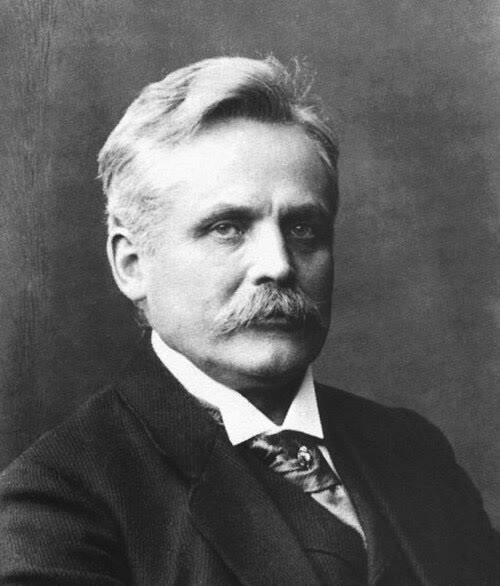
Wilhelm Wien
German physicist (1864-1928)
नेपालीमा पढ्नुहोस् · हिंदी में पढ़ें
- नेपाली · English · हिंदीRead in your language
- CitedEvery fact sourced
- Ad-freeNo ads, no tracking
Wilhelm Carl Werner Otto Fritz Franz Wien (German: [ˈvɪlhɛlm ˈviːn] ; 13 January 1864 – 30 August 1928) was a German physicist who used theories about heat and electromagnetism to deduce Wien's displacement law, which calculates the emission of a blackbody at any temperature from the emission at any one reference temperature.
Quick facts
Positions held wd
- rector (1925–1926)
- chairperson (1920–1922)
- co-editor (1906–1928)
Awards wd
- Nobel Prize in Physics (1911)
- Bavarian Maximilian Order for Science and Art (1925)
- Guthrie Lecture (1925)
- honorary member of the Physics Association (Frankfurt am Main, Germany) (1901)
About
Wien also formulated an expression for the black-body radiation, which is correct in the photon-gas limit. His arguments were based on the notion of adiabatic invariance, and were instrumental for the formulation of quantum mechanics. Wien received the Nobel Prize in Physics in 1911 for his work on heat radiation.
He was a cousin of Max Wien, inventor of the Wien bridge.
People also search for
 Camillo Golgi
 Paul Karrer
 Johannes Fibiger
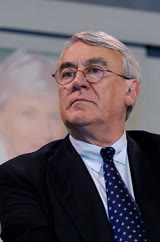 Claude Goasguen
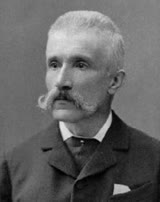 Francesco Brioschi
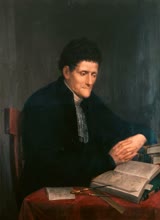 Paolo Ruffini
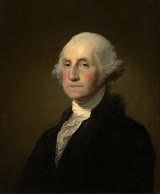 George Washington
 Rajendra Prasad
 Mohammad Mokhber
 Rupert Murdoch
 Michael Bloomberg
 Larry Ellison
Questions
- When was Wilhelm Wien born?
- Wilhelm Wien was born on 13 January 1864 in Parusnoye.
- What positions has Wilhelm Wien held?
- Positions held by Wilhelm Wien include: rector (1925–1926); chairperson (1920–1922); co-editor (1906–1928).
- Where did Wilhelm Wien study?
- Wilhelm Wien was educated at University of Göttingen, Frederick William University Berlin, Frederick William University Berlin, Altstadt Gymnasium.
Sources
- Wikipedia (English): Wilhelm Wien · CC BY-SA 4.0
- Wikidata item Q57068 · CC0 1.0
- Image: Wien2.jpg (Public domain)

Last updated · facts checked 5 November 2026
Cite this page
"Wilhelm Wien". DigiNepal. Last updated 1 November 2026. https://diginpl.com/people/wilhelm-wien. Retrieved 5 November 2026.
Is this you, or do you work in this person's office? Claim this profile