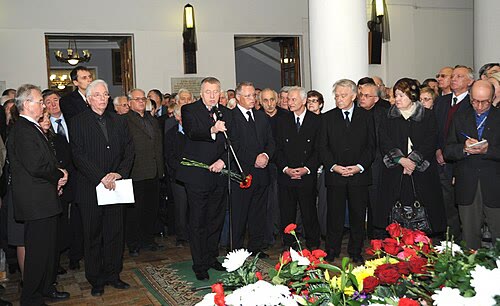
Vitaly Ginzburg
Russian physicist (1916–2009)
नेपालीमा पढ्नुहोस् · हिंदी में पढ़ें
- नेपाली · English · हिंदीRead in your language
- CitedEvery fact sourced
- Ad-freeNo ads, no tracking
Vitaly Lazarevich Ginzburg ForMemRS (Russian: Вита́лий Ла́заревич Ги́нзбург; 4 October [O.S. 21 September] 1916 – 8 November 2009) was a Russian physicist who was honored with the Nobel Prize in Physics in 2003, together with Alexei Abrikosov and Anthony Leggett for their "pioneering contributions to the theory of superconductors and superfluids."
Quick facts
- Born
- wd
- Place of birth
- Moscow wd
- Died
- wd
- Place of death
- Moscow wd
- Citizenship
- Soviet Union, Russia wd
- Occupation
- physicist, astrophysicist, inventor, university teacher, scientist, theoretical physicist wd
- Political party
- Communist Party of the Soviet Union wd
- Education
- MSU Faculty of Physics, Lomonosov Moscow State University wd
- Spouse
- Olga Zamsha Ginzburg, Nina Yermakova Ginzburg wd
Awards wd
- Order of Lenin (1954)
- UNESCO Niels Bohr Medal (1998)
- Order of the Badge of Honour
- Nobel Prize in Physics (2003)
- Order "For Merit to the Fatherland", 1st class (2006)
- Order "For Merit to the Fatherland", 3rd class (1996)
- Gold Medal of the Royal Astronomical Society (1991)
- Lomonosov Gold Medal (1995)
- Wolf Prize in Physics (1995)
- Order of the Red Banner of Labour
- Medal "For Valiant Labour in the Great Patriotic War 1941–1945"
- Lenin Prize (1966)
- Jubilee Medal "In Commemoration of the 100th Anniversary of the Birth of Vladimir Ilyich Lenin" (1970)
- Medal "In Commemoration of the 800th Anniversary of Moscow" (1948)
- Fellow of the American Physical Society (2003)
About
He spent his career in the former Soviet Union and was one of the leading figure in former Soviet program of nuclear weapons, working towards designs of the thermonuclear devices. He became a member of the Russian Academy of Sciences and succeeded Igor Tamm as head of the Department of Theoretical Physics of the Lebedev Physical Institute of the Russian Academy of Sciences (FIAN). After the fall of the Soviet-Union Ginzburg presented himself as an atheist and became an outspoken critic of the Russian Orthodox clergy's influence in Russian society. Yet simultaneously, he publicly identified as an agnostic Jew, served on the board of directors of the Russian Jewish Congress, vocally fought what he considered anti-semitism in Russian society and was a very active supporter and fundraiser for Israel and Zionist causes.
People also search for
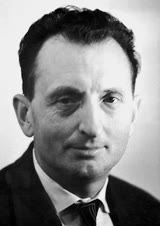 Alexander Prokhorov
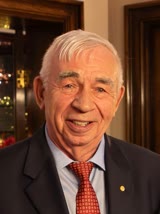 Alexey Ekimov
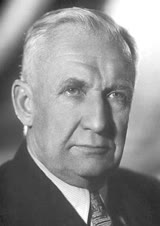 Igor Tamm
 Ilya Frank
 Konstantin Novoselov
 Pavel Cherenkov
 Pyotr Kapitsa
 Julian Sochocki
 Leonid Sedov
 Viktor Reshetniak
Questions
- When was Vitaly Ginzburg born?
- Vitaly Ginzburg was born on 4 October 1916 in Moscow.
- Where did Vitaly Ginzburg study?
- Vitaly Ginzburg was educated at MSU Faculty of Physics, Lomonosov Moscow State University.
Sources
- Wikipedia (English): Vitaly Ginzburg · CC BY-SA 4.0
- Wikidata item Q104668 · CC0 1.0
- Image: Farewell to Vitaly Ginzburg 01.jpg by ЛДПР (CC BY 3.0)

Last updated · facts checked 6 November 2026
Cite this page
"Vitaly Ginzburg". DigiNepal. Last updated 1 November 2026. https://diginpl.com/people/vitaly-ginzburg. Retrieved 6 November 2026.
Is this you, or do you work in this person's office? Claim this profile