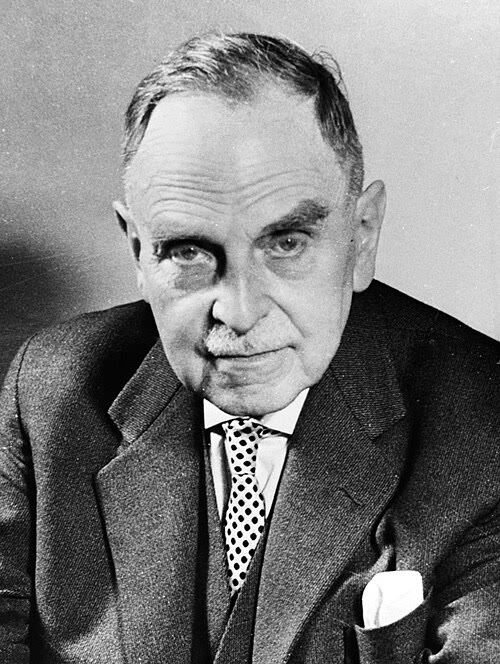
Otto Hahn
German chemist and physicist (1879-1968)
नेपालीमा पढ्नुहोस् · हिंदी में पढ़ें
- नेपाली · English · हिंदीRead in your language
- CitedEvery fact sourced
- Ad-freeNo ads, no tracking
Otto Hahn (German: [ˈɔtoː ˈhaːn] ; 8 March 1879 – 28 July 1968) was a German chemist who was a pioneer in the field of radiochemistry. He is referred to as the father of nuclear chemistry and discoverer of nuclear fission, the science behind nuclear reactors and nuclear weapons. Hahn and Lise Meitner discovered isotopes of the radioactive elements radium, thorium, protactinium and uranium. He also discovered the phenomena of atomic recoil and nuclear isomerism, and pioneered rubidium–strontium dating. In 1938, Hahn, Meitner, Otto Frisch and Fritz Strassmann discovered nuclear fission, for which Hahn alone was awarded the 1944 Nobel Prize in Chemistry.
Quick facts
- Born
- wd
- Place of birth
- Frankfurt wd
- Died
- wd
- Place of death
- Göttingen wd
- Citizenship
- West Germany, German Empire wd
- Occupation
- chemist, university teacher, non-fiction writer, nuclear physicist, autobiographer, physicist wd
- Education
- University of Marburg, LMU Munich, Humboldt-Universität zu Berlin wd
- Spouse
- Edith Junghans wd
Awards wd
- Officer of the Legion of Honour (1959)
- Pour le Mérite for Sciences and Arts order (1952)
- honorary citizen of Berlin
- Officer of the Order of the British Empire (1957)
- Great Cross with Star and Sash of the Order of Merit of the Federal Republic of Germany (1954)
- Faraday Lectureship Prize (1956)
- Ernst Reuter Medal (1959)
- Nobel Prize in Chemistry (1944)
- Max Planck Medal (1949)
- honorary citizen of Frankfurt am Main (1959)
- Harnack medal (1954)
- Wilhelm Exner Medal (1958)
- Helmholtz Medal (1959)
- Goethe Plaque of the City of Frankfurt (1944)
About
A graduate of Marburg University, which awarded him a doctorate in 1901, Hahn studied under Sir William Ramsay at University College London and at McGill University in Montreal, Canada, under Ernest Rutherford, where he discovered several new radioactive isotopes. He returned to Germany in 1906; Emil Fischer let him use a former woodworking shop in the basement of the Chemical Institute at the Friedrich Wilhelm University of Berlin as a laboratory. Hahn completed his habilitation in early 1907 and became a Privatdozent. In 1912, he became head of the Radioactivity Department of the newly founded Kaiser Wilhelm Institute for Chemistry (KWIC). Working with Austrian physicist Lise Meitner in the building that now bears their names, they made a series of groundbreaking discoveries, culminating with her isolation of the longest-lived isotope of protactinium in 1918.
During World War I Hahn served with a Landwehr regiment on the Western Front, and with the chemical warfare unit headed by Fritz Haber on the Western, Eastern and Italian fronts, earning the Iron Cross (2nd Class) for his part in the First Battle of Ypres. After the war he became the head of the KWIC, while remaining in charge of his own department. Between…
People also search for
 Ada Yonath
 Adolf von Baeyer
 Ahmed Zewail
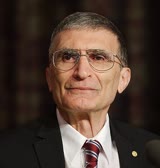 Aziz Sancar
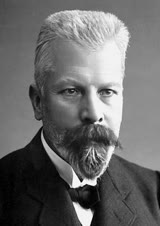 Eduard Buchner
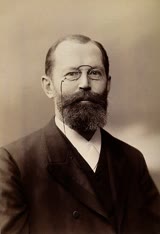 Emil Fischer
 Emmanuelle Charpentier
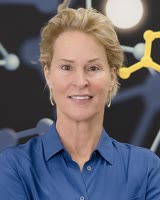 Frances Arnold
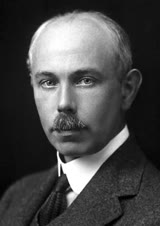 Francis William Aston
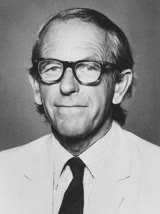 Frederick Sanger
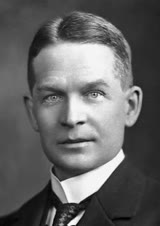 Frederick Soddy
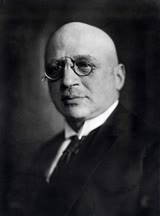 Fritz Haber
Questions
- When was Otto Hahn born?
- Otto Hahn was born on 8 March 1879 in Frankfurt.
- Where did Otto Hahn study?
- Otto Hahn was educated at University of Marburg, LMU Munich, Humboldt-Universität zu Berlin.
Sources
- Wikipedia (English): Otto Hahn · CC BY-SA 4.0
- Wikidata item Q57065 · CC0 1.0
- Image: Otto Hahn 1970.jpg by Basch, [...] / Opdracht Anefo (CC BY-SA 3.0 nl)

Last updated · facts checked 3 November 2026
Cite this page
"Otto Hahn". DigiNepal. Last updated 31 October 2026. https://diginpl.com/people/otto-hahn. Retrieved 3 November 2026.
Is this you, or do you work in this person's office? Claim this profile