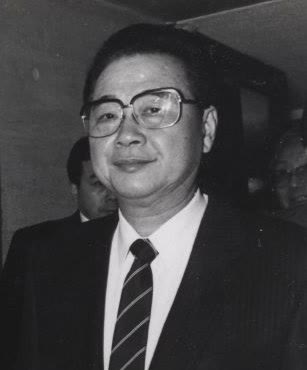
Li Peng
4th Premier of the People's Republic of China (1928–2019)
नेपालीमा पढ्नुहोस् · हिंदी में पढ़ें
- नेपाली · English · हिंदीRead in your language
- CitedEvery fact sourced
- Ad-freeNo ads, no tracking
Li Peng (Chinese: 李鹏; pinyin: Lǐ Péng; 20 October 1928 – 22 July 2019) was a Chinese politician who served as the premier of China from 1987 to 1998, and as the chairman of the Standing Committee of the National People's Congress, China's top legislative body, from 1998 to 2003. For much of the 1990s Li was ranked second in the Chinese Communist Party (CCP) hierarchy behind then CCP General Secretary Jiang Zemin. He retained his seat on the CCP Politburo Standing Committee until his retirement in 2002.
Quick facts
Positions held wd
- Chairman of the Standing Committee of the National People's Congress (16 March 1998 – 15 March 2003)
- Premier of the People's Republic of China (12 April 1988 – 17 March 1998)
- member of the Politburo Standing Committee of the Chinese Communist Party (1 November 1987 – 15 November 2002)
- member of the Politburo of the Chinese Communist Party (24 October 1985 – 15 November 2002)
- Vice Premier of the State Council of the People's Republic of China (6 June 1983 – 24 November 1987)
- National People's Congress deputy
- Minister of Education of the People's Republic of China
Awards wd
- Grand Cross of the Order of the Sun of Peru
- Pushkin Medal (2007)
- Nishan-e-Pakistan
- Order of the Yugoslavian Great Star
About
Li was the son of an early Communist revolutionary, Li Shuoxun, who was executed by the Kuomintang. After meeting Zhou Enlai in Sichuan, Li was raised by Zhou and his wife, Deng Yingchao. Li trained to be an engineer in the Soviet Union and worked at an important national power company after returning to China. He escaped the political turmoil of the 1950s, 1960s, and 1970s due to his political connections and his employment in the company. After Deng Xiaoping became China's leader in the late 1970s, Li took a number of increasingly important and powerful political positions, first becoming Vice Minister and later Minister of Power. In 1983, he became a vice premier. In 1985, he became the minister of the State Education Commission as well as a member of the Politburo and the Party Secretariat. He was elected to the Politburo Standing Committee in 1987.
In 1987, following the appointment of Premier Zhao Ziyang as the CCP General Secretary, Li became the acting premier, before being appointed on a permanent basis in 1988. As Premier, Li became the most visible representative of the CCP who backed the use of force to quell the Tiananmen Square protests of 1989. During the demonstrations, Li used his authority as premier to declare martial law and, in cooperation with Deng Xiaoping, who was the Chairman of the Central Military Commission, declared military law and the…
People also search for
 Liu Shaoqi
 Zhou Enlai
 Li Keqiang
 Wen Jiabao
 Zhu Rongji
 Li Qiang
 Mao Zedong
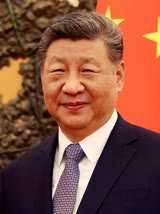 Xi Jinping
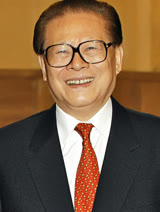 Jiang Zemin
Questions
- When was Li Peng born?
- Li Peng was born on 20 October 1928 in Shanghai.
- What positions has Li Peng held?
- Positions held by Li Peng include: Chairman of the Standing Committee of the National People's Congress (1998–2003); Premier of the People's Republic of China (1988–1998); member of the Politburo Standing Committee of the Chinese Communist Party (1987–2002); member of the Politburo of the Chinese Communist Party (1985–2002); Vice Premier of the State Council of the People's Republic of China (1983–1987).
- Where did Li Peng study?
- Li Peng was educated at Moscow Power Engineering Institute.
Sources
- Wikipedia (English): Li Peng · CC BY-SA 4.0
- Wikidata item Q18301 · CC0 1.0
- Image: Lipeng.jpg by World Economic Forum from Cologny, Switzerland. cropped by Shizhao (CC BY-SA 2.0)

Last updated · facts checked 7 November 2026
Cite this page
"Li Peng". DigiNepal. Last updated 31 October 2026. https://diginpl.com/people/li-peng. Retrieved 7 November 2026.
Is this you, or do you work in this person's office? Claim this profile