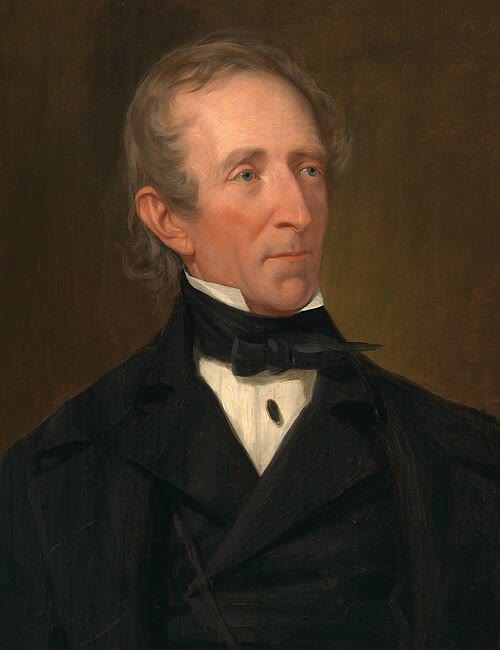
John Tyler
जोन टेलर
President of the United States from 1841 to 1845
नेपालीमा पढ्नुहोस् · हिंदी में पढ़ें
- नेपाली · English · हिंदीRead in your language
- CitedEvery fact sourced
- Ad-freeNo ads, no tracking
John Tyler (March 29, 1790 – January 18, 1862) was the tenth president of the United States, serving from 1841 to 1845, after briefly holding office as the tenth vice president in 1841. He was elected vice president on the 1840 Whig ticket with William Henry Harrison, succeeding to the presidency following Harrison's death 31 days after assuming office as president. Tyler was a stalwart supporter and advocate of states' rights, including regarding slavery, and he adopted nationalistic policies as president only when they did not infringe on the states' powers. His unexpected rise to the presidency posed a threat to the presidential ambitions of Senator Henry Clay and other Whig politicians and left Tyler estranged from both major political parties at the time: the Whigs and the Democrats.
Quick facts
- Born
- wd
- Place of birth
- Greenway Plantation wd
- Died
- wd
- Place of death
- Richmond wd
- Citizenship
- United States wd
- Occupation
- politician, lawyer, statesperson, governor wd
- Political party
- Whig Party (1834–1841), Democratic Party (1828–1834), Democratic-Republican Party (1811–1828) wd
- Education
- College of William & Mary wd
- Spouse
- Letitia Christian Tyler, Julia Gardiner Tyler wd
Positions held wd
- President of the United States (4 April 1841 – 4 March 1845)
- Vice President of the United States (4 March 1841 – 4 April 1841)
- United States senator (4 March 1835 – 29 February 1836)
- United States senator (4 March 1833 – 4 March 1835)
- United States senator (4 March 1831 – 4 March 1833)
- United States senator (4 March 1829 – 4 March 1831)
- United States senator (4 March 1827 – 4 March 1829)
- Governor of Virginia (10 December 1825 – 4 March 1827)
- United States representative (17 December 1816 – 3 March 1821)
- member of the Virginia House of Delegates (1811–1816)
About
Tyler was born into a prominent slaveholding Virginia family. He became a national figure at a time of political upheaval. In the 1820s, the Democratic-Republican Party, at the time the nation's only political party, split into multiple factions. Initially a Jacksonian Democrat, Tyler opposed President Andrew Jackson during the nullification crisis as he saw Jackson's actions as infringing on states' rights and criticized Jackson's expansion of executive power during Jackson's veto on banks. This led Tyler to ally with the southern faction of the Whig Party. He served as a Virginia state legislator and governor, U.S. representative, and U.S. senator. Tyler was a regional Whig vice-presidential nominee in the 1836 presidential election, which Democrat Martin Van Buren won. He was the sole nominee on the 1840 Whig presidential ticket as William Henry Harrison's running mate. Under the campaign slogan "Tippecanoe and Tyler Too", the Harrison–Tyler ticket defeated Van Buren.
President Harrison died just one month after taking office, and Tyler became the first vice president to…
People also search for
 Barack Obama
 Donald Trump
 Ronald Reagan
 Abraham Lincoln
 George W. Bush
 Joe Biden
 Thomas Jefferson
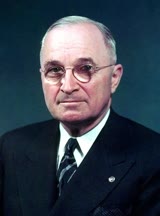 Harry S. Truman
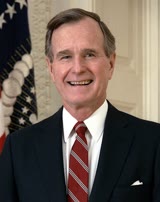 George H. W. Bush
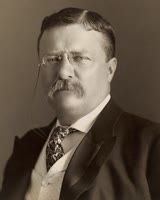 Theodore Roosevelt
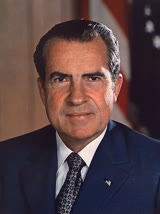 Richard Nixon
 John F. Kennedy
Questions
- When was John Tyler born?
- John Tyler was born on 29 March 1790 in Greenway Plantation.
- What positions has John Tyler held?
- Positions held by John Tyler include: President of the United States (1841–1845); Vice President of the United States (1841–1841); United States senator (1835–1836); United States senator (1833–1835); United States senator (1831–1833).
- Where did John Tyler study?
- John Tyler was educated at College of William & Mary.
Sources
- Wikipedia (English): John Tyler · CC BY-SA 4.0
- Wikipedia (Nepali): जोन टेलर · CC BY-SA 4.0
- Wikidata item Q11881 · CC0 1.0
- Image: Tyler, John, by Healy (1842, NPG 2019 13) (cropped).jpg by George Peter Alexander Healy (Public domain)

Last updated · facts checked 7 November 2026
Cite this page
"John Tyler". DigiNepal. Last updated 31 October 2026. https://diginpl.com/people/john-tyler. Retrieved 7 November 2026.
Is this you, or do you work in this person's office? Claim this profile