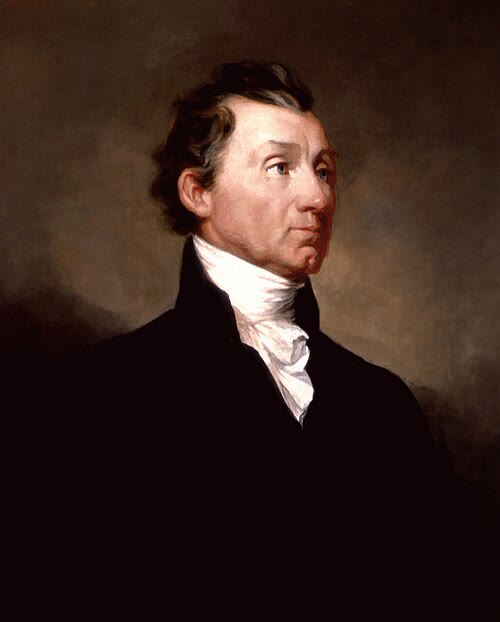
James Monroe
जेम्स मुनरो
President of the United States from 1817 to 1825 (1758–1831)
नेपालीमा पढ्नुहोस् · हिंदी में पढ़ें
- नेपाली · English · हिंदीRead in your language
- CitedEvery fact sourced
- Ad-freeNo ads, no tracking
James Monroe (April 28, 1758 – July 4, 1831) was a Founding Father and the fifth president of the United States, serving from 1817 to 1825. He was the last Founding Father to serve as president, as well as the last president of the Virginia dynasty. A member of the Democratic-Republican Party, Monroe's presidency coincided with the Era of Good Feelings, in which the First Party System era of American politics concluded. He issued the Monroe Doctrine, a policy aimed at limiting European colonialism in the Americas.
Quick facts
Positions held wd
- President of the United States (4 March 1817 – 4 March 1825)
- President-elect of the United States (1816–1817)
- United States Secretary of State (28 February 1815 – 3 March 1817)
- United States Secretary of State (1 October 1814 – 28 February 1815)
- United States Secretary of War (27 September 1814 – 2 March 1815)
- United States Secretary of State (2 April 1811 – 30 September 1814)
- United States Ambassador to the United Kingdom (17 August 1803 – 7 October 1807)
- Governor of Virginia (28 December 1799 – 1 December 1802)
- United States Ambassador to France (15 August 1794 – 9 December 1796)
- United States senator (4 March 1793 – 27 May 1794)
- United States senator (4 March 1791 – 4 March 1793)
- United States senator (9 November 1790 – 4 March 1791)
- member of the Virginia House of Delegates
About
During the American Revolutionary War, he served in the Continental Army. From 1780 to 1783, Monroe studied law under Thomas Jefferson and subsequently served as a delegate to both the Continental Congress and the Virginia Ratifying Convention. He opposed the ratification of the United States Constitution. In 1790, Monroe won election to the Senate where he became a leader of the Democratic-Republican Party. He left the Senate in 1794 to serve as President George Washington's ambassador to France but was recalled by Washington in 1796. Monroe won the election as Governor of Virginia in 1799 and strongly supported Jefferson's candidacy in the 1800 presidential election.
As President Jefferson's special envoy, Monroe helped negotiate the Louisiana Purchase, through which the United States nearly doubled in size. Monroe fell out with his longtime friend James Madison after Madison rejected the Monroe–Pinkney Treaty that Monroe negotiated with Britain. He unsuccessfully challenged Madison for the Democratic-Republican nomination in the 1808 presidential election, and he joined Madison's administration as Secretary of State in 1811. During the later stages of the War of 1812, Monroe simultaneously served as Madison's Secretary of State and Secretary of War. Monroe's wartime leadership established him as Madison's heir apparent, and he easily defeated…
People also search for
 Barack Obama
 Donald Trump
 Ronald Reagan
 Abraham Lincoln
 George W. Bush
 Joe Biden
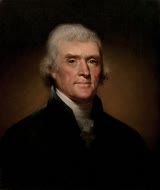 Thomas Jefferson
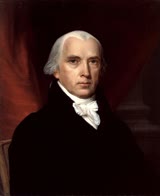 James Madison
 John Quincy Adams
 Martin Van Buren
 James Buchanan
 Mike Pompeo
Questions
- When was James Monroe born?
- James Monroe was born on 28 April 1758 in Monroe Hall.
- What positions has James Monroe held?
- Positions held by James Monroe include: President of the United States (1817–1825); President-elect of the United States (1816–1817); United States Secretary of State (1815–1817); United States Secretary of State (1814–1815); United States Secretary of War (1814–1815).
- Where did James Monroe study?
- James Monroe was educated at College of William & Mary.
Sources
- Wikipedia (English): James Monroe · CC BY-SA 4.0
- Wikipedia (Nepali): जेम्स मुनरो · CC BY-SA 4.0
- Wikidata item Q11815 · CC0 1.0
- Image: James Monroe White House portrait 1819 (cropped)(2).jpg by Samuel Finley Breese Morse (Public domain)

Last updated · facts checked 7 November 2026
Cite this page
"James Monroe". DigiNepal. Last updated 31 October 2026. https://diginpl.com/people/james-monroe. Retrieved 7 November 2026.
Is this you, or do you work in this person's office? Claim this profile