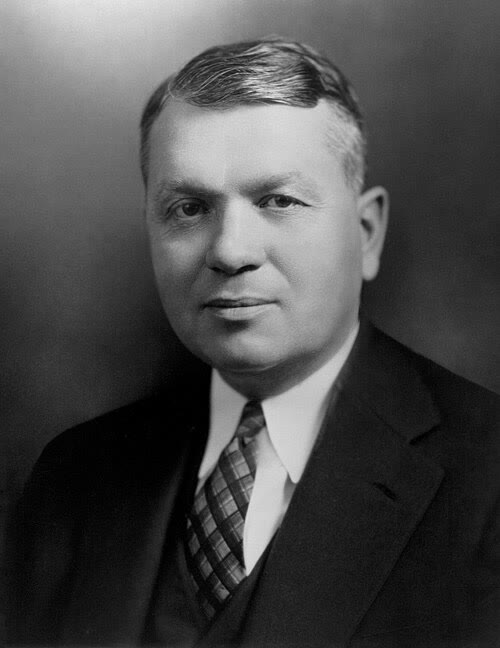
Harold Urey
ह्यारोड युरे
American physical chemist (1893-1981)
नेपालीमा पढ्नुहोस् · हिंदी में पढ़ें
- नेपाली · English · हिंदीRead in your language
- CitedEvery fact sourced
- Ad-freeNo ads, no tracking
Harold Clayton Urey ( YOOR-ee; April 29, 1893 – January 5, 1981) was an American physical chemist who conducted pioneering work on isotopes. He earned the 1934 Nobel Prize in Chemistry "for his discovery of heavy hydrogen." He played a significant role in the development of the atom bomb, as well as contributing to theories on the development of organic life from non-living matter.
Quick facts
- Born
- wd
- Place of birth
- Walkerton wd
- Died
- wd
- Place of death
- La Jolla wd
- Citizenship
- United States wd
- Occupation
- astronomer, chemist, physical chemist, physicist, university teacher, writer wd
- Education
- Earlham College, University of Montana, University of California, Berkeley, Columbia University wd
- Spouse
- Frieda Urey wd
Awards wd
- Nobel Prize in Chemistry (1934)
- Franklin Medal (1943)
- Medal for Merit
- J. Lawrence Smith Medal (1962)
- Gold Medal of the Royal Astronomical Society (1966)
- Priestley Medal (1973)
- Arthur L. Day Medal (1969)
- Willard Gibbs Award (1934)
- National Medal of Science (1964)
- V. M. Goldschmidt Award (1975)
- Fellow of the American Physical Society
- Davy Medal (1940)
- Liversidge Award (1946)
- Guthrie Lecture (1957)
- Foreign Member of the Royal Society (1947)
About
Born in Walkerton, Indiana, Urey studied thermodynamics under Gilbert N. Lewis at the University of California, Berkeley. After he received his PhD in 1923, he was awarded a fellowship by the American-Scandinavian Foundation to study at the Niels Bohr Institute in Copenhagen. He was a research associate at Johns Hopkins University from 1924 to 1929, before becoming an associate professor of chemistry at Columbia University. In 1931, he began work with the separation of isotopes that resulted in the discovery of deuterium.
During World War II, Urey turned his knowledge of isotope separation to the problem of uranium enrichment. He headed the group located at Columbia University that developed isotope separation using gaseous diffusion. The method was successfully developed, becoming the sole method used in the early post-war period. After the war, Urey became professor of chemistry at the Institute for Nuclear Studies, and later Ryerson professor of chemistry at the University of Chicago.
Urey speculated the early terrestrial atmosphere was composed of ammonia, methane, and hydrogen. One of his Chicago graduate students was Stanley L. Miller, who showed in the Miller–Urey experiment that if such a mixture were exposed to electric sparks and water, it can interact to produce amino acids, which are among the molecular building blocks of life. Work with isotopes of oxygen led to pioneering the new field of paleoclimatic research. In 1958, he accepted a post as a professor at large at the…
People also search for
 Ahmed Zewail
 Aziz Sancar
 Frances Arnold
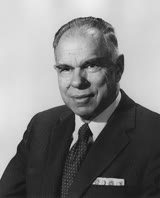 Glenn T. Seaborg
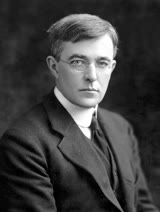 Irving Langmuir
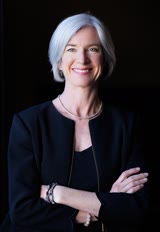 Jennifer Doudna
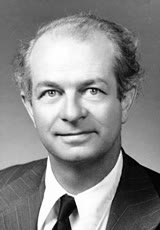 Linus Pauling
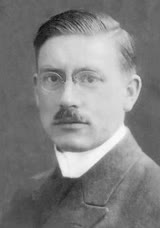 Peter Debye
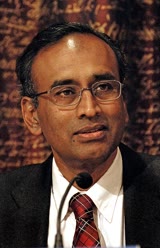 Venki Ramakrishnan
Questions
- When was Harold Urey born?
- Harold Urey was born on 29 April 1893 in Walkerton.
- Where did Harold Urey study?
- Harold Urey was educated at Earlham College, University of Montana, University of California, Berkeley, Columbia University.
Sources
- Wikipedia (English): Harold Urey · CC BY-SA 4.0
- Wikidata item Q179777 · CC0 1.0
- Image: Harold Urey, 1934.jpg by Flickr: ENERGY.GOV - Unknown photographer. Restored by Creator:Adam Cuerden (Public domain)

Last updated · facts checked 4 November 2026
Cite this page
"Harold Urey". DigiNepal. Last updated 31 October 2026. https://diginpl.com/people/harold-urey. Retrieved 4 November 2026.
Is this you, or do you work in this person's office? Claim this profile