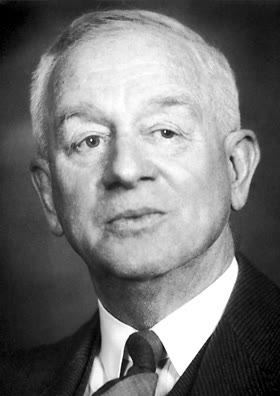
Francis Peyton Rous
American scientist (1879-1970)
नेपालीमा पढ्नुहोस् · हिंदी में पढ़ें
- नेपाली · English · हिंदीRead in your language
- CitedEvery fact sourced
- Ad-freeNo ads, no tracking
Francis Peyton Rous (; October 5, 1879 – February 16, 1970) was an American pathologist at the Rockefeller University known for his works in oncoviruses, blood transfusion and physiology of digestion. A medical graduate from the Johns Hopkins University, he was discouraged from becoming a practicing physician due to severe tuberculosis. After three years of working as an instructor of pathology at the University of Michigan, he became dedicated researcher at the Rockefeller Institute for Medical Research for the rest of his career.
Quick facts
Awards wd
- Albert Lasker Award for Basic Medical Research (1958)
- Nobel Prize in Physiology or Medicine (1966)
- National Medal of Science (1965)
- Jessie Stevenson Kovalenko Medal (1955)
- Foreign Member of the Royal Society (1940)
- George M. Kober Lectureship (1946)
- George M. Kober Medal (1953)
- AACR-G.H.A. Clowes Award for Outstanding Basic Cancer Research (1963)
- John Scott Award (1927)
- Karl Landsteiner Memorial Award
About
His discovery in 1911 that a chicken tumor was caused by a virus (later named Rous sarcoma virus) led to more discoveries and understanding of the role of viruses in the development of certain types of cancer. He was awarded a Nobel Prize in Physiology or Medicine for his work in 1966, 55 years after his initial discovery and he remains the oldest recipient of the Nobel Prize in Medicine or Physiology.
He and Joseph R. Turner studied methods to make use of blood types for blood transfusion. During World War I, they developed a technique for preserving blood sample by using an acid, citrate. This enabled the first practical storage of blood samples for transfusion and was introduced by Oswald H. Robertson at the front line in Belgium in 1917 as the world's first blood bank.
People also search for
 Jan Koum
 Joe Gebbia
 Luke Nosek
 Miriam Adelson
 Adam Riess
 Alan J. Heeger
 Alfred G. Gilman
 Alfred Hershey
 Allan MacLeod Cormack
 Andrea M. Ghez
 Andrew Fire
 Andrew Schally
Questions
- When was Francis Peyton Rous born?
- Francis Peyton Rous was born on 5 October 1879 in Baltimore.
- Where did Francis Peyton Rous study?
- Francis Peyton Rous was educated at Johns Hopkins School of Medicine, Johns Hopkins University.
Sources
- Wikipedia (English): Francis Peyton Rous · CC BY-SA 4.0
- Wikidata item Q298707 · CC0 1.0
- Image: Peyton Rous nobel.jpg by Unknown (PD-Sweden)

Last updated · facts checked 4 November 2026
Cite this page
"Francis Peyton Rous". DigiNepal. Last updated 31 October 2026. https://diginpl.com/people/francis-peyton-rous. Retrieved 5 November 2026.
Is this you, or do you work in this person's office? Claim this profile