Official update

South Asia Wildlife Enforcement Network (SAWEN) को पहिलो महासभा काठमाडौंमा सम्पन्न

२६ भदौ २०८३26 Bhadra 20832 PDF, 3 images
Issued by

Ministry of Agriculture, Forest and Environment

More from this department

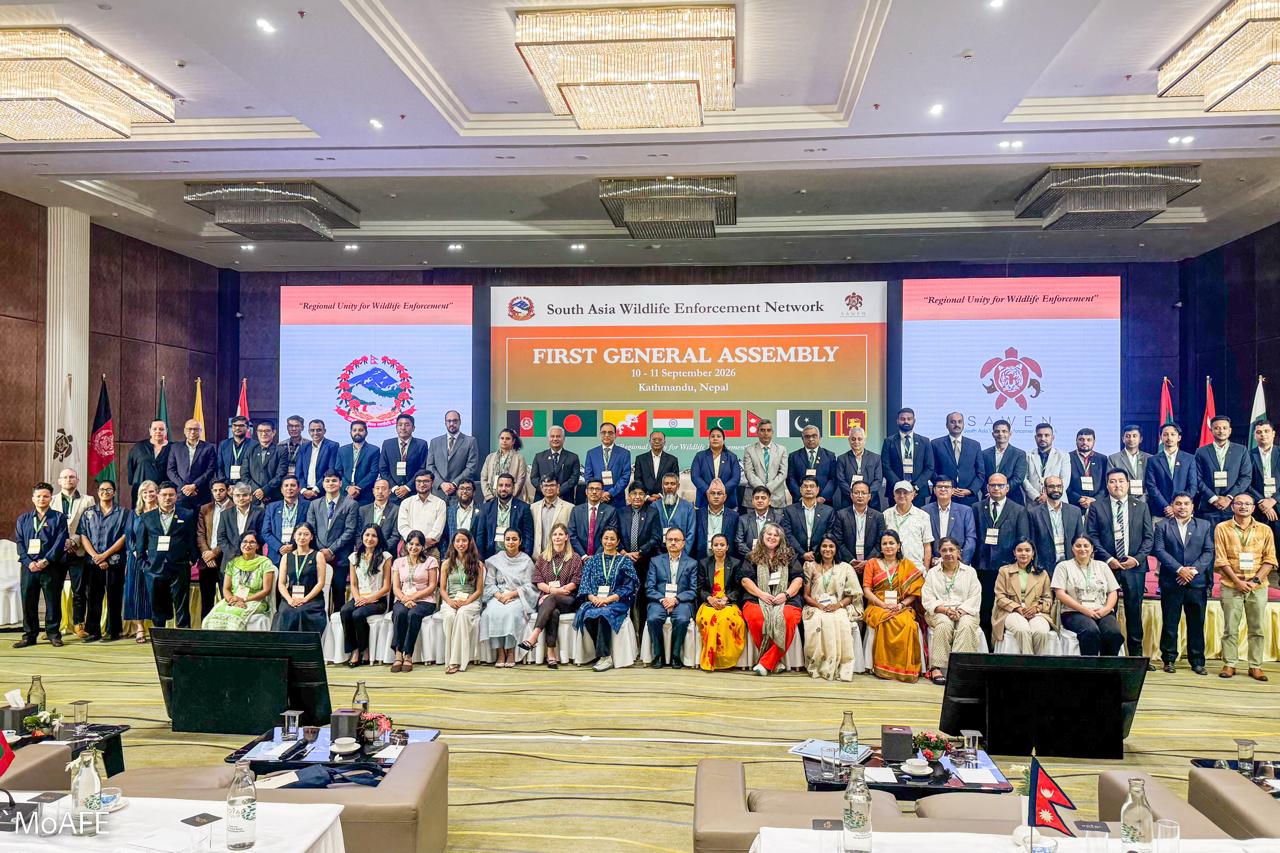
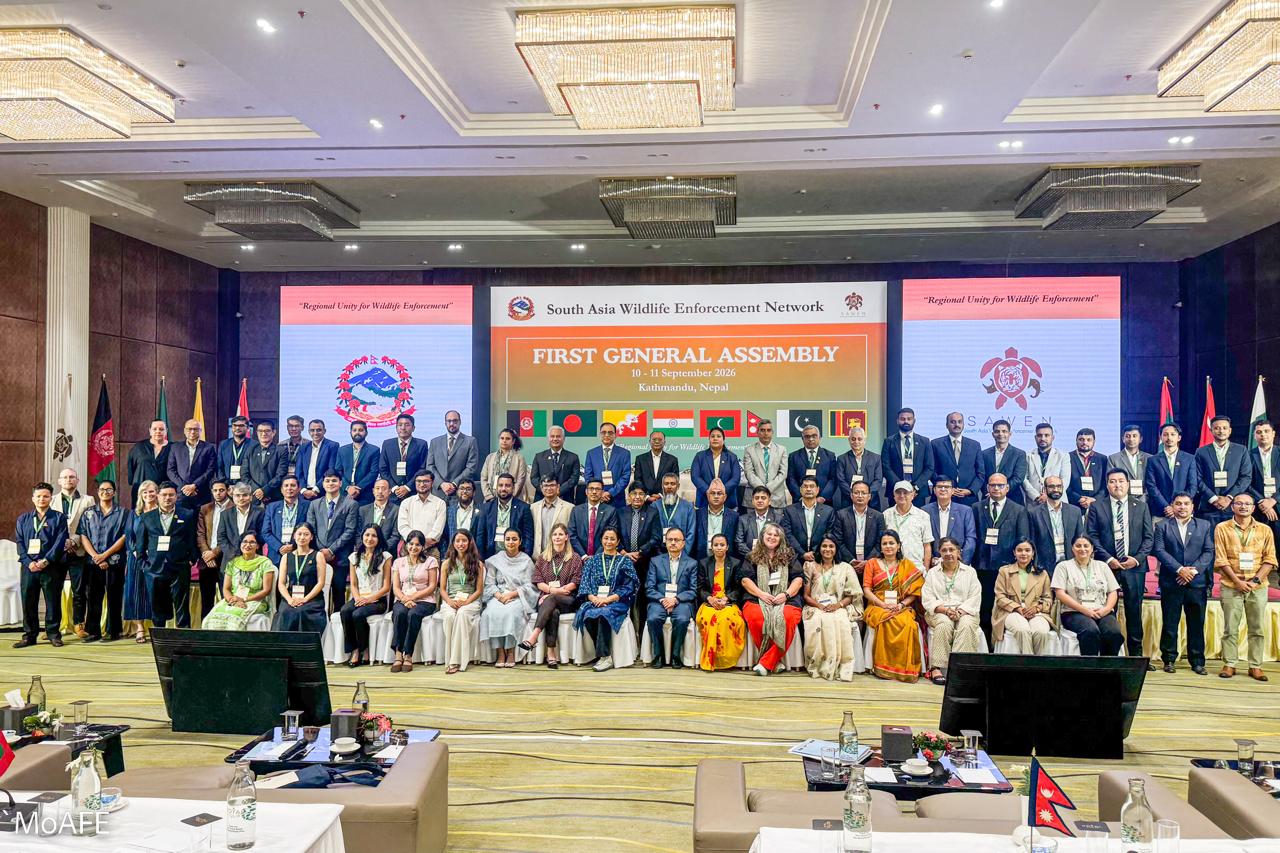
दक्षिण एशियामा वन्यजन्तु अपराध नियन्त्रण र जैविक विविधताको संरक्षणका लागि क्षेत्रीय सहकार्यलाई थप सुदृढ बनाउने महत्वपूर्ण उपलब्धिसहित South Asia Wildlife Enforcement Network (SAWEN) को पहिलो महासभा काठमाडौंमा सम्पन्न भएको छ।
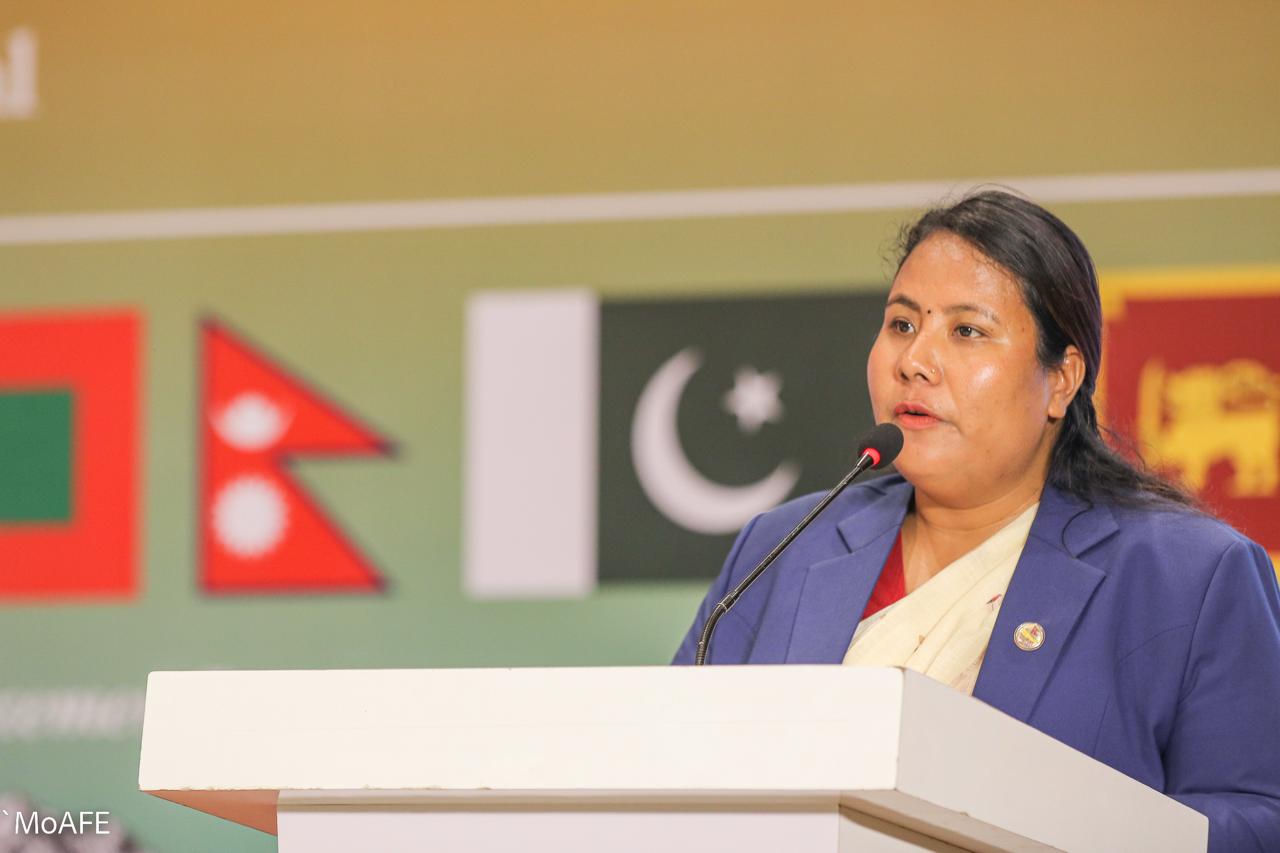
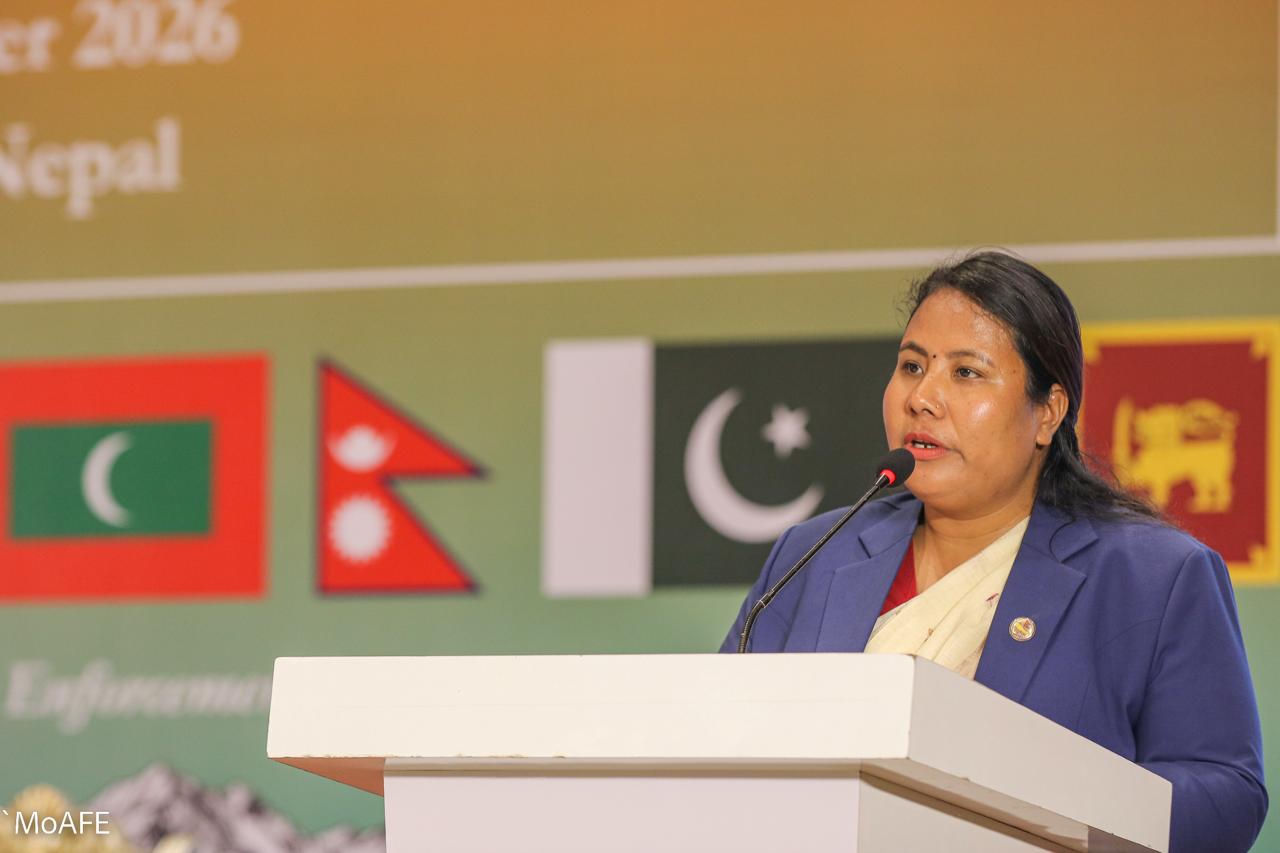
कृषि, वन तथा पर्यावरण मन्त्री गिता चौधरीको सभापतित्वमा सम्पन्न भएको महासभाले ‘Kathmandu Declaration’ तथा SAWEN Implementation Plan 2026–2030 सहित विभिन्न महत्वपूर्ण निर्णयहरू अनुमोदन गरेको छ।
GA_Media-Summary.pdf

OpenDownload
Page 1 of 3: GA_Media-Summary.pdf
1 / 3
Page 2 of 3: GA_Media-Summary.pdf
2 / 3
Page 3 of 3: GA_Media-Summary.pdf
3 / 3

SAWEN_SEC_GA_2026_L6_Rev1_10Sept.pdf

OpenDownload
Page 1 of 2: SAWEN_SEC_GA_2026_L6_Rev1_10Sept.pdf
1 / 2
Page 2 of 2: SAWEN_SEC_GA_2026_L6_Rev1_10Sept.pdf
2 / 2

Attachments

Text extracted from the PDF

This text was extracted from the attached PDF by machine and may contain errors. The attached PDF is the authoritative version.

GA_Media-Summary.pdf
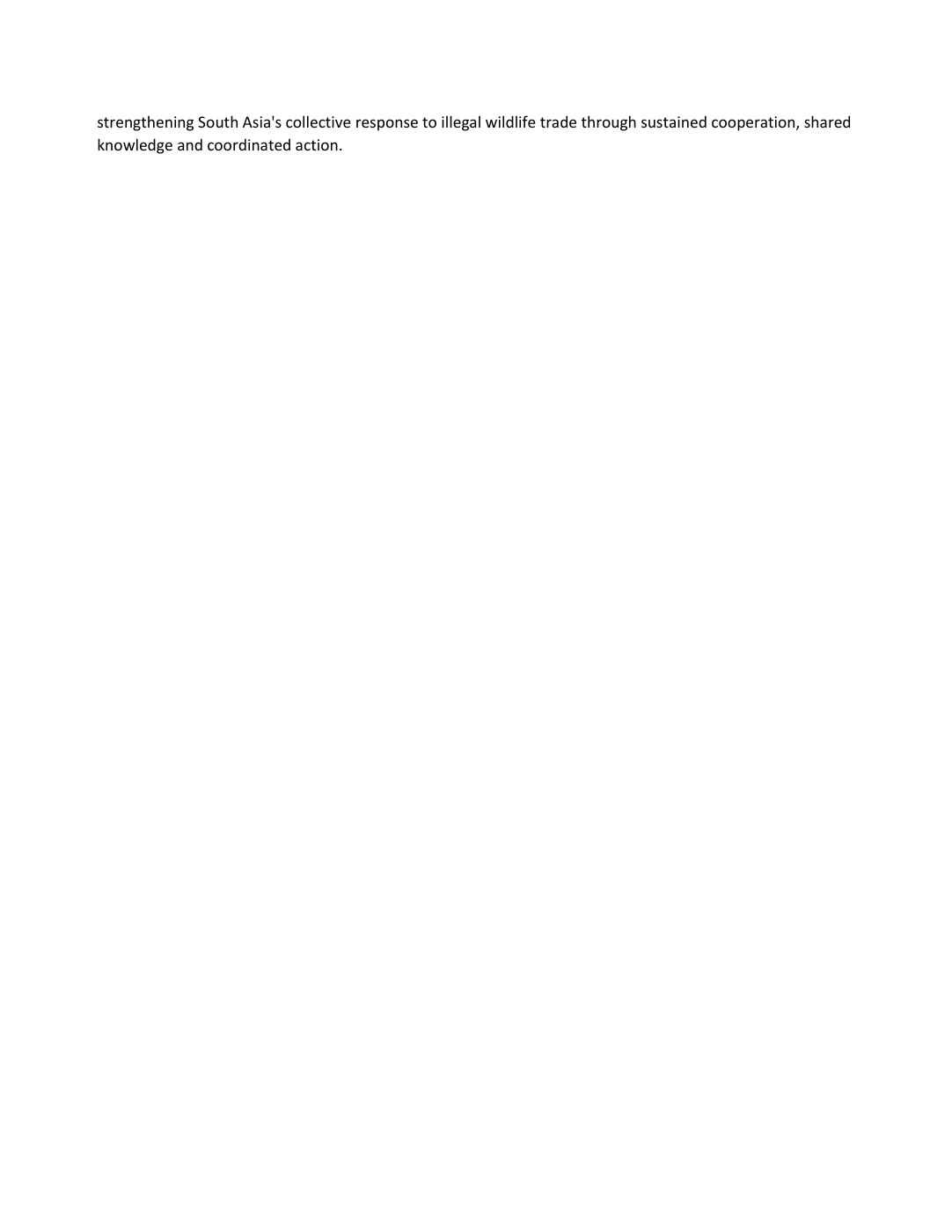
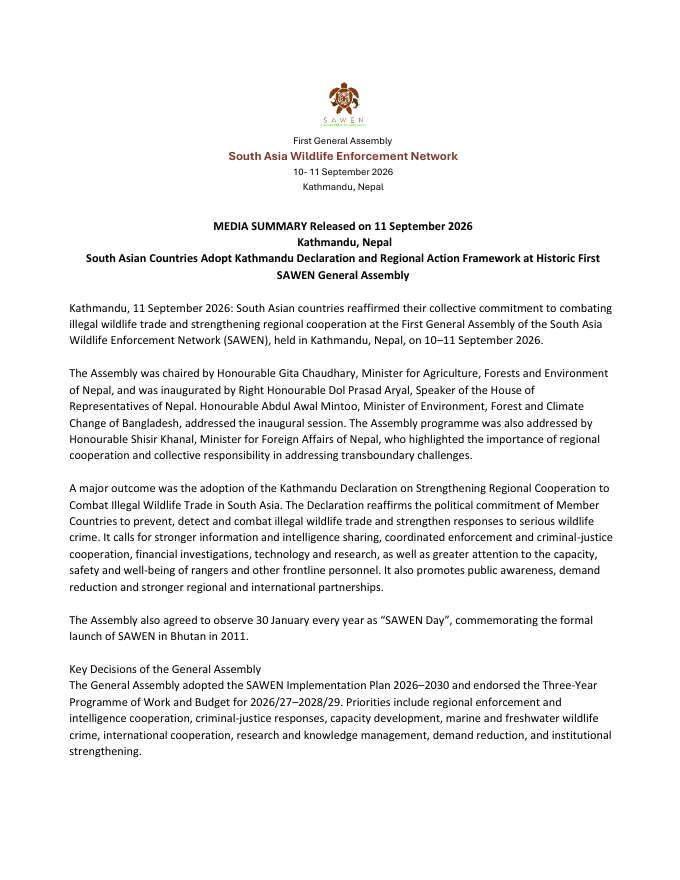
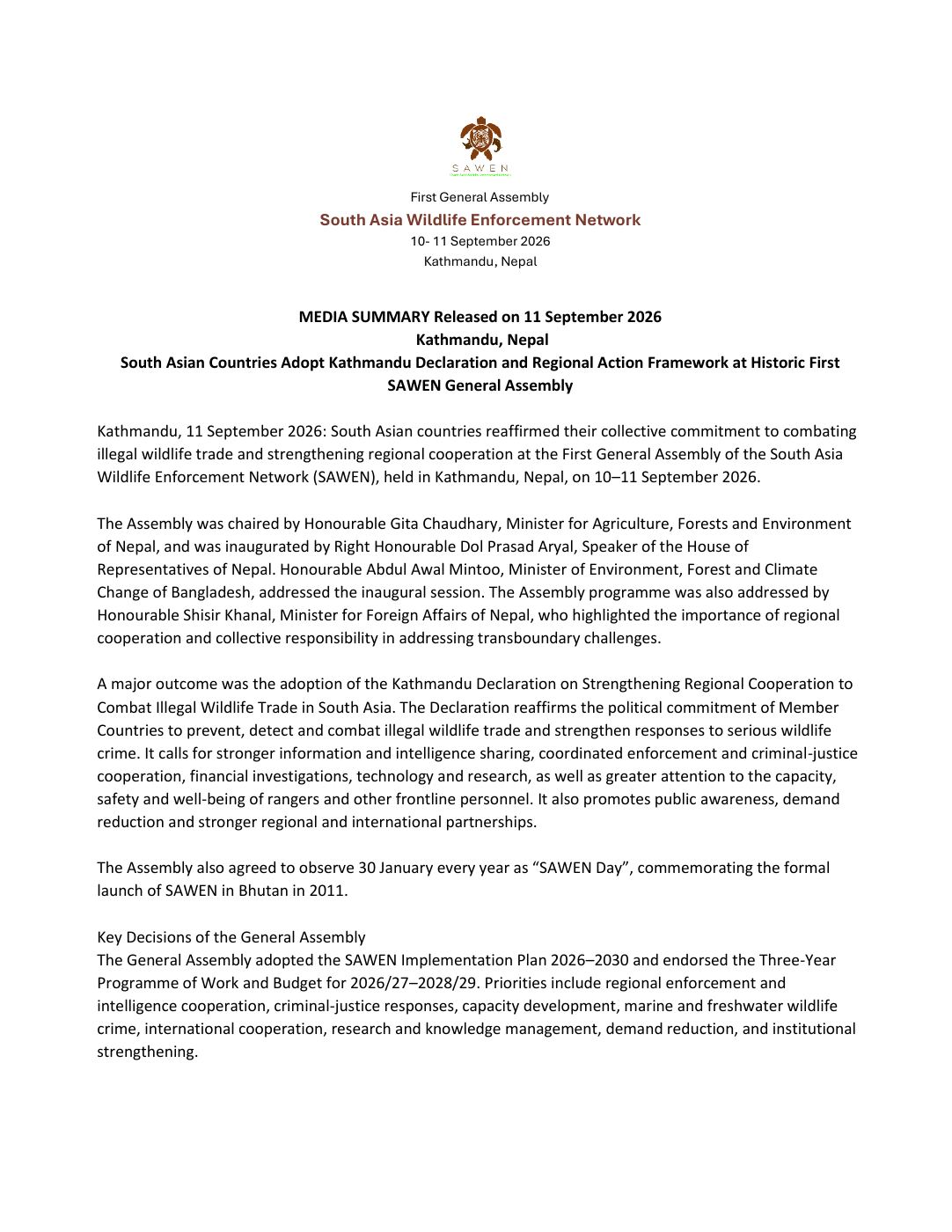
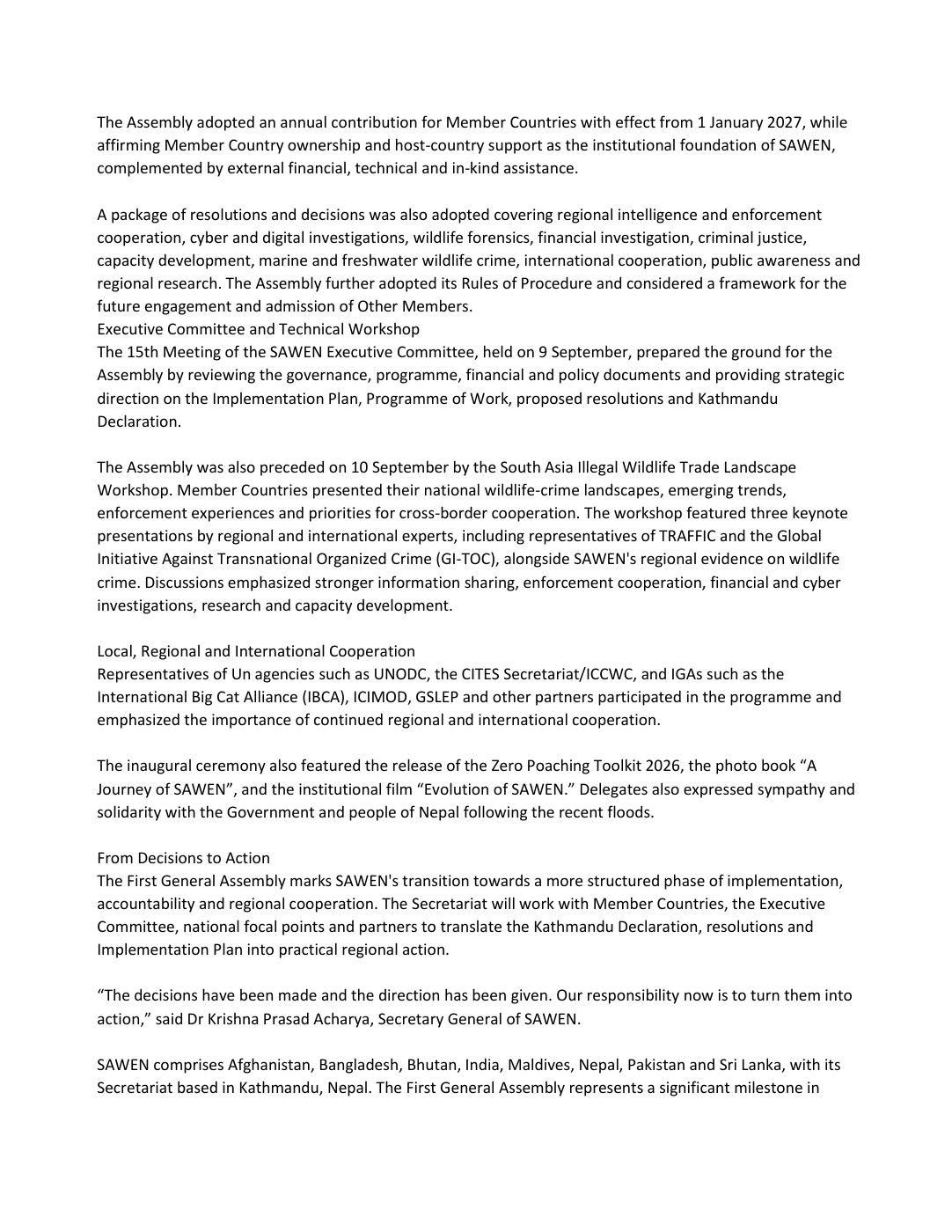
First General Assembly South Asia Wildlife Enforcement Network 10- 11 September 2026 Kathmandu, Nepal MEDIA SUMMARY Released on 11 September 2026 Kathmandu, Nepal South Asian Countries Adopt Kathmandu Declaration and Regional Action Framework at Historic First SAWEN General Assembly Kathmandu, 11 September 2026: South Asian countries reaffirmed their collective commitment to combating illegal wildlife trade and strengthening regional cooperation at the First General Assembly of the South Asia Wildlife Enforcement Network (SAWEN), held in Kathmandu, Nepal, on 10–11 September 2026. The Assembly was chaired by Honourable Gita Chaudhary, Minister for Agriculture, Forests and Environment of Nepal, and was inaugurated by Right Honourable Dol Prasad Aryal, Speaker of the House of Representatives of Nepal. Honourable Abdul Awal Mintoo, Minister of Environment, Forest and Climate Change of Bangladesh, addressed the inaugural session. The Assembly programme was also addressed by Honourable Shisir Khanal, Minister for Foreign Affairs of Nepal, who highlighted the importance of regional cooperation and collective responsibility in addressing transboundary challenges. A major outcome was the adoption of the Kathmandu Declaration on Strengthening Regional Cooperation to Combat Illegal Wildlife Trade in South Asia. The Declaration reaffirms the political commitment of Member Countries to prevent, detect and combat illegal wildlife trade and strengthen responses to serious wildlife crime. It calls for stronger information and intelligence sharing, coordinated enforcement and criminal-justice cooperation, financial investigations, technology and research, as well as greater attention to the capacity, safety and well-being of rangers and other frontline personnel. It also promotes public awareness, demand reduction and stronger regional and international partnerships. The Assembly also agreed to observe 30 January every year as “SAWEN Day”, commemorating the formal launch of SAWEN in Bhutan in 2011. Key Decisions of the General Assembly The General Assembly adopted the SAWEN Implementation Plan 2026–2030 and endorsed the Three-Year Programme of Work and Budget for 2026/27–2028/29. Priorities include regional enforcement and intelligence cooperation, criminal-justice responses, capacity development, marine and freshwater wildlife crime, international cooperation, research and knowledge management, demand reduction, and institutional strengthening. The Assembly adopted an annual contribution for Member Countries with effect from 1 January 2027, while affirming Member Country ownership and host-country support as the institutional foundation of SAWEN, complemented by external financial, technical and in-kind assistance. A package of resolutions and decisions was also adopted covering regional intelligence and enforcement cooperation, cyber and digital investigations, wildlife forensics, financial investigation, criminal justice, capacity development, marine and freshwater wildlife crime, international cooperation, public awareness and regional research. The Assembly further adopted its Rules of Procedure and considered a framework for the future engagement and admission of Other Members. Executive Committee and Technical Workshop The 15th Meeting of the SAWEN Executive Committee, held on 9 September, prepared the ground for the Assembly by reviewing the governance, programme, financial and policy documents and providing strategic direction on the Implementation Plan, Programme of Work, proposed resolutions and Kathmandu Declaration. The Assembly was also preceded on 10 September by the South Asia Illegal Wildlife Trade Landscape Workshop. Member Countries presented their national wildlife-crime landscapes, emerging trends, enforcement experiences and priorities for cross-border cooperation. The workshop featured three keynote presentations by regional and international experts, including representatives of TRAFFIC and the Global Initiative Against Transnational Organized Crime (GI-TOC), alongside SAWEN's regional evidence on wildlife crime. Discussions emphasized stronger information sharing, enforcement cooperation, financial and cyber investigations, research and capacity development. Local, Regional and International Cooperation Representatives of Un agencies such as UNODC, the CITES Secretariat/ICCWC, and IGAs such as the International Big Cat Alliance (IBCA), ICIMOD, GSLEP and other partners participated in the programme and emphasized the importance of continued regional and international cooperation. The inaugural ceremony also featured the release of the Zero Poaching Toolkit 2026, the photo book “A Journey of SAWEN”, and the institutional film “Evolution of SAWEN.” Delegates also expressed sympathy and solidarity with the Government and people of Nepal following the recent floods. From Decisions to Action The First General Assembly marks SAWEN's transition towards a more structured phase of implementation, accountability and regional cooperation. The Secretariat will work with Member Countries, the Executive Committee, national focal points and partners to translate the Kathmandu Declaration, resolutions and Implementation Plan into practical regional action. “The decisions have been made and the direction has been given. Our responsibility now is to turn them into action,” said Dr Krishna Prasad Acharya, Secretary General of SAWEN. SAWEN comprises Afghanistan, Bangladesh, Bhutan, India, Maldives, Nepal, Pakistan and Sri Lanka, with its Secretariat based in Kathmandu, Nepal. The First General Assembly represents a significant milestone in strengthening South Asia's collective response to illegal wildlife trade through sustained cooperation, shared knowledge and coordinated action.
SAWEN_SEC_GA_2026_L6_Rev1_10Sept.pdf
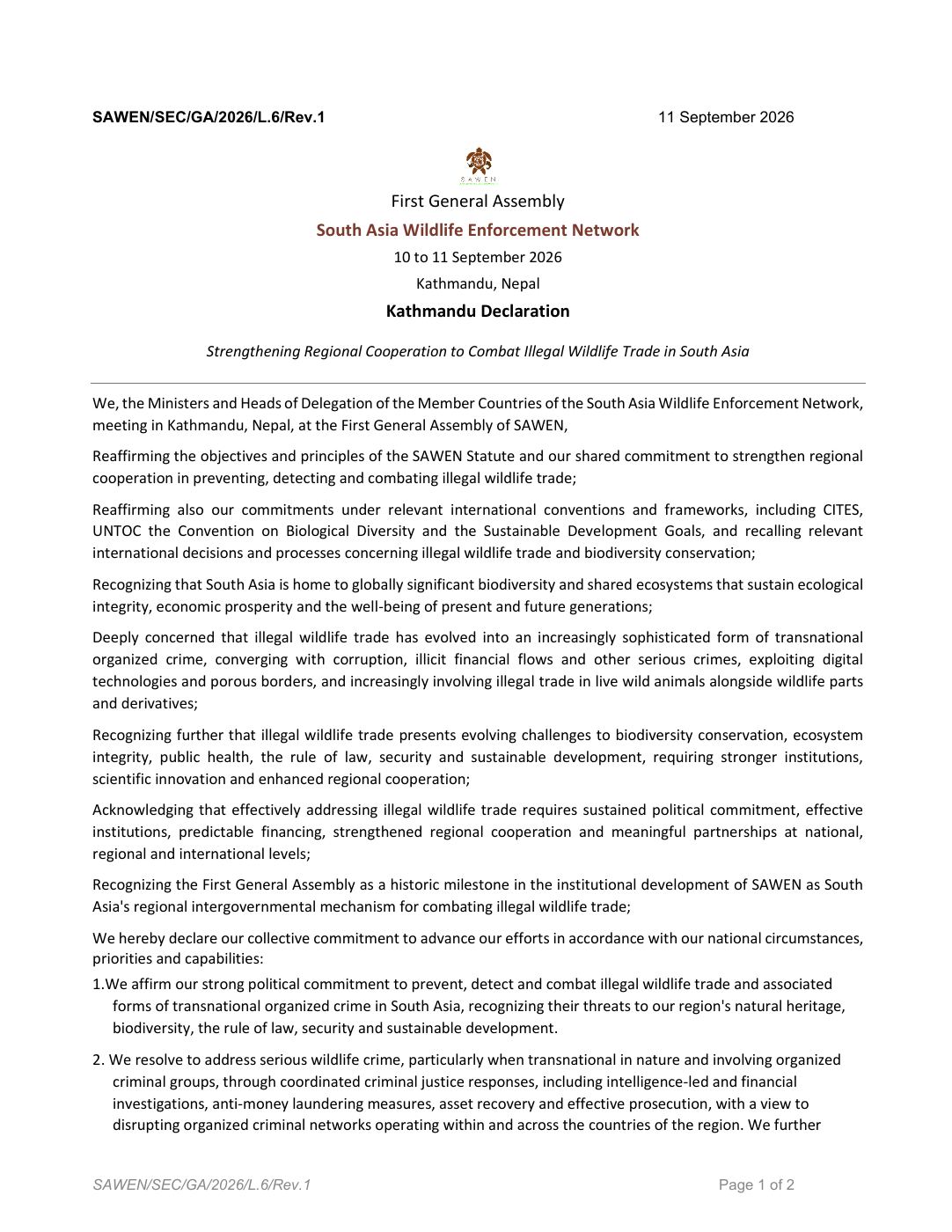
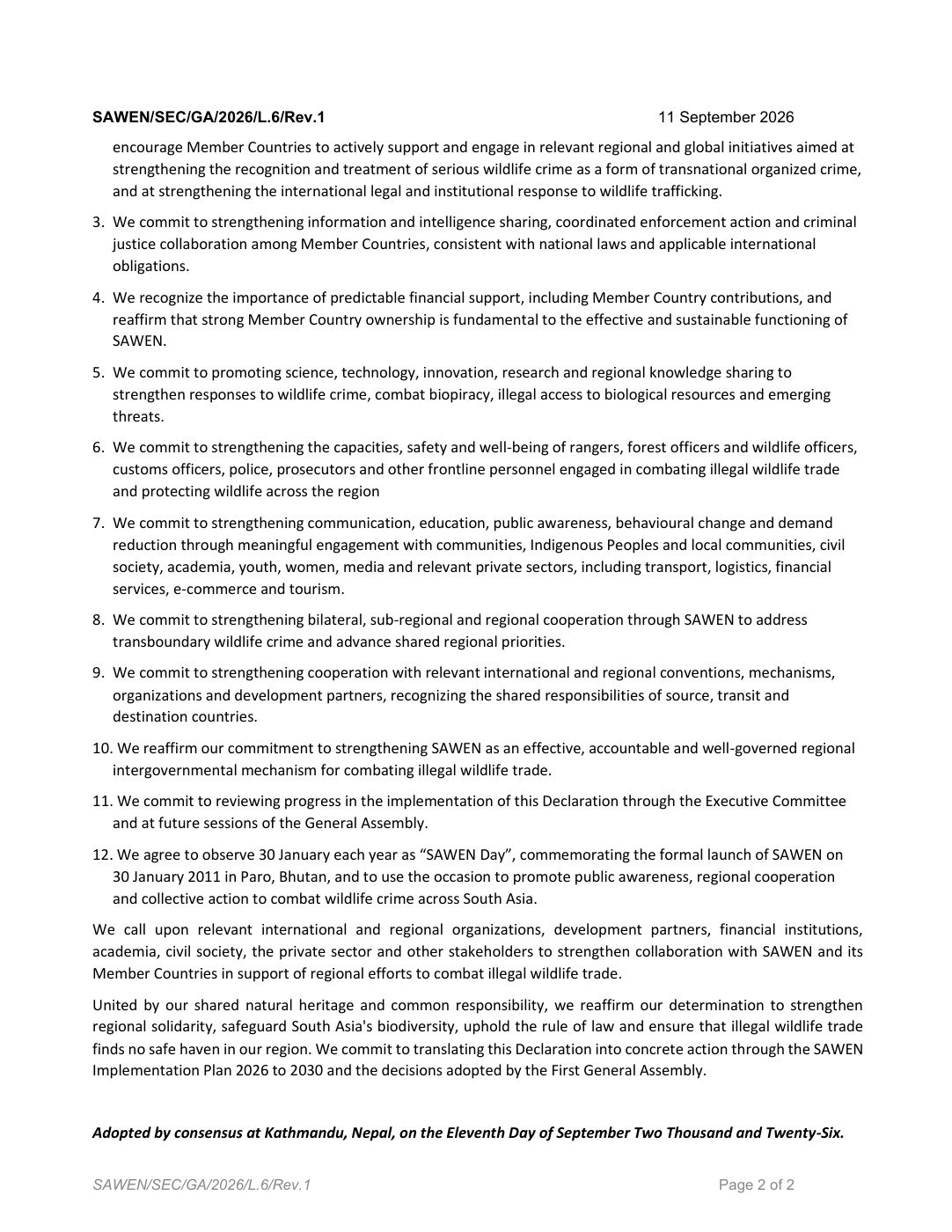
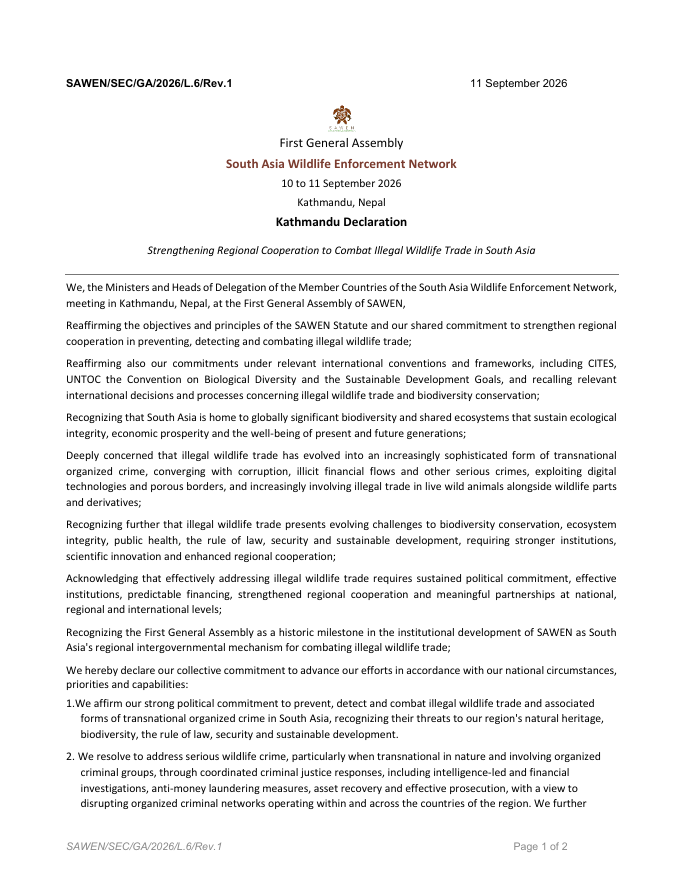
SAWEN/SEC/GA/2026/L.6/Rev.1 11 September 2026 First General Assembly South Asia Wildlife Enforcement Network 10 to 11 September 2026 Kathmandu, Nepal Kathmandu Declaration Strengthening Regional Cooperation to Combat Illegal Wildlife Trade in South Asia We, the Ministers and Heads of Delegation of the Member Countries of the South Asia Wildlife Enforcement Network, meeting in Kathmandu, Nepal, at the First General Assembly of SAWEN, Reaffirming the objectives and principles of the SAWEN Statute and our shared commitment to strengthen regional cooperation in preventing, detecting and combating illegal wildlife trade; Reaffirming also our commitments under relevant international conventions and frameworks, including CITES, UNTOC the Convention on Biological Diversity and the Sustainable Development Goals, and recalling relevant international decisions and processes concerning illegal wildlife trade and biodiversity conservation; Recognizing that South Asia is home to globally significant biodiversity and shared ecosystems that sustain ecological integrity, economic prosperity and the well-being of present and future generations; Deeply concerned that illegal wildlife trade has evolved into an increasingly sophisticated form of transnational organized crime, converging with corruption, illicit financial flows and other serious crimes, exploiting digital technologies and porous borders, and increasingly involving illegal trade in live wild animals alongside wildlife parts and derivatives; Recognizing further that illegal wildlife trade presents evolving challenges to biodiversity conservation, ecosystem integrity, public health, the rule of law, security and sustainable development, requiring stronger institutions, scientific innovation and enhanced regional cooperation; Acknowledging that effectively addressing illegal wildlife trade requires sustained political commitment, effective institutions, predictable financing, strengthened regional cooperation and meaningful partnerships at national, regional and international levels; Recognizing the First General Assembly as a historic milestone in the institutional development of SAWEN as South Asia's regional intergovernmental mechanism for combating illegal wildlife trade; We hereby declare our collective commitment to advance our efforts in accordance with our national circumstances, priorities and capabilities: 1.We affirm our strong political commitment to prevent, detect and combat illegal wildlife trade and associated forms of transnational organized crime in South Asia, recognizing their threats to our region's natural heritage, biodiversity, the rule of law, security and sustainable development. 2. We resolve to address serious wildlife crime, particularly when transnational in nature and involving organized criminal groups, through coordinated criminal justice responses, including intelligence-led and financial investigations, anti-money laundering measures, asset recovery and effective prosecution, with a view to disrupting organized criminal networks operating within and across the countries of the region. We further SAWEN/SEC/GA/2026/L.6/Rev.1 Page 1 of 2 SAWEN/SEC/GA/2026/L.6/Rev.1 11 September 2026 encourage Member Countries to actively support and engage in relevant regional and global initiatives aimed at strengthening the recognition and treatment of serious wildlife crime as a form of transnational organized crime, and at strengthening the international legal and institutional response to wildlife trafficking. 3. We commit to strengthening information and intelligence sharing, coordinated enforcement action and criminal justice collaboration among Member Countries, consistent with national laws and applicable international obligations. 4. We recognize the importance of predictable financial support, including Member Country contributions, and reaffirm that strong Member Country ownership is fundamental to the effective and sustainable functioning of SAWEN. 5. We commit to promoting science, technology, innovation, research and regional knowledge sharing to strengthen responses to wildlife crime, combat biopiracy, illegal access to biological resources and emerging threats. 6. We commit to strengthening the capacities, safety and well-being of rangers, forest officers and wildlife officers, customs officers, police, prosecutors and other frontline personnel engaged in combating illegal wildlife trade and protecting wildlife across the region 7. We commit to strengthening communication, education, public awareness, behavioural change and demand reduction through meaningful engagement with communities, Indigenous Peoples and local communities, civil society, academia, youth, women, media and relevant private sectors, including transport, logistics, financial services, e-commerce and tourism. 8. We commit to strengthening bilateral, sub-regional and regional cooperation through SAWEN to address transboundary wildlife crime and advance shared regional priorities. 9. We commit to strengthening cooperation with relevant international and regional conventions, mechanisms, organizations and development partners, recognizing the shared responsibilities of source, transit and destination countries. 10. We reaffirm our commitment to strengthening SAWEN as an effective, accountable and well-governed regional intergovernmental mechanism for combating illegal wildlife trade. 11. We commit to reviewing progress in the implementation of this Declaration through the Executive Committee and at future sessions of the General Assembly. 12. We agree to observe 30 January each year as “SAWEN Day”, commemorating the formal launch of SAWEN on 30 January 2011 in Paro, Bhutan, and to use the occasion to promote public awareness, regional cooperation and collective action to combat wildlife crime across South Asia. We call upon relevant international and regional organizations, development partners, financial institutions, academia, civil society, the private sector and other stakeholders to strengthen collaboration with SAWEN and its Member Countries in support of regional efforts to combat illegal wildlife trade. United by our shared natural heritage and common responsibility, we reaffirm our determination to strengthen regional solidarity, safeguard South Asia's biodiversity, uphold the rule of law and ensure that illegal wildlife trade finds no safe haven in our region. We commit to translating this Declaration into concrete action through the SAWEN Implementation Plan 2026 to 2030 and the decisions adopted by the First General Assembly. Adopted by consensus at Kathmandu, Nepal, on the Eleventh Day of September Two Thousand and Twenty-Six. SAWEN/SEC/GA/2026/L.6/Rev.1 Page 2 of 2

Source: National Portal of Nepal

DigiNepal mirrors public notices for easier reading. DigiNepal is independent and is not affiliated with or endorsed by the publisher. Check the original source for the official record.
Related updates