Makar Sankranti
माघे सङ्क्रान्ति
HinduBuddhistSikh
Dates
| 2083 BS | First day of makara masa, Bhogi (15 January in leap years; 14 January on all other years) — date to be announced | Date to be announced |
| 2084 BS | First day of makara masa, Bhogi (15 January in leap years; 14 January on all other years) — date to be announced | Date to be announced |
When: First day of makara masa, Bhogi (15 January in leap years; 14 January on all other years) (Wikipedia)
Makar(a) Sankrānti (Sanskrit: मकरसङ्क्रान्ति, romanized: Makarasaṅkrānti; transl. Capricorn Festival) also referred to as Uttarāyana, Makara, or simply Sankrānti, is a Hindu observance and a mid-winter harvest festival in India and Nepal. Hindus worship Surya, the Sun god, in Makara Sankranti. It is typically celebrated on 14 January annually (15 January in a leap year). This occasion marks the transition of the sun from the zodiac of Sagittarius (dhanu) to Capricorn (makara). As this transition coincides with the sun's movement from south to north, the festival is dedicated to the solar deity, Surya, and is observed to mark a new beginning. Across India, the occasion is celebrated with numerous multi-day festivals.
The festivities associated with Makar Sankranti are known by various names including Sankranthi or Peddha Panduga in Andhra Pradesh and Telangana, Khichari in Bhojpuri region, Magh Bihu in Assam, Maghi Saaji in Himachal Pradesh, Makaravilakku in Kerala, Makara sankranti in Karnataka, Maghi Sangrand in Punjab, Pongal in Tamil Nadu, Maghi Sangrand or Uttarain (Uttarayana) in Jammu, Sakrat in Haryana, Sakraat in Rajasthan, Sukarat in central India, Uttarayana in Gujarat and Uttar Pradesh, Ghughuti in Uttarakhand, Dahi Chura in Bihar, Makar Sankranti in Odisha, Jharkhand, Maharashtra, Goa, West Bengal (also called Poush Sankranti or Mokor Sonkranti), Uttar Pradesh (also called Khichidi Sankranti), Uttarakhand (also called Uttarayani) or as simply, Maghe Sankranti (Nepal), Songkran (Thailand), Thingyan (Myanmar), Mohan Songkran (Cambodia), Til Sakraat in Mithila, and Shishur Senkrath (Kashmir). On Makar Sankranti, Surya (Hindu solar deity) is worshipped along with Vishnu and goddess Lakshmi throughout India.
Makar Sankranti is observed with social festivities such as colourful decorations, rural children going house to house, singing and asking for treats in some areas, melas (fairs), dances, kite flying, bonfires and feasts. The Magha Mela is mentioned in the Hindu epic Mahabharata. Many observers go to sacred rivers or lakes and bathe in a ceremony of thanks to the Sun. Every twelve years, the Hindus observe Makar Sankranti with Kumbha Mela – one of the world's largest mass pilgrimage, with an estimated 60 to 100 million people attending the event. At this event, they say a prayer to the Sun and bathe at the Prayagaraj confluence of the River Ganga and River Yamuna, a tradition attributed to Adi Shankaracharya. Makar Sankranti is a time of celebration and thanks giving, and is marked by a variety of rituals and tradition.
नेपालीमा
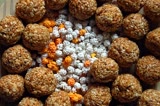
माघे सङ्क्रान्ति, मकर सङ्क्रान्ति तथा माघी नामले चिनिने नेपालको एक प्रमुख चाड हो। यो माघ महिनाको पहिलो दिन पर्दछ। ज्योतिष शास्त्र अनुसार सौर्यमासको हिसाबले माघे सङ्क्रान्तिदेखि सूर्य धनु राशिबाट मकर राशिमा प्रवेश गर्ने हुनाले यसलाई 'मकर सङ्क्रान्ति' पनि भनिएको हो। सामान्यतया सूर्यले सबै राशिलाई प्रभावित गरेता पनि सूर्यको कर्कट राशि (साउने सङ्क्रान्ति) र मकर राशि (माघे सङ्क्रान्ति) प्रवेशलाई धार्मिक दृष्टिले मह्त्वपूर्ण मानिन्छ। यो दिनदेखि सूर्य दक्षिणी गोलार्धबाट उत्तरी गोलार्ध तर्फ प्रवेश गर्ने भएकोले दिन लामो र रात छोटो हुँदै जाने विश्वास गरिन्छ तापनि आजभोलि पुष ७ गतेबाटै दिन लम्बिन र रात छोट्टिन शुरु हुन्छ। माघे सङ्क्रान्ति पर्व नेपाल भर विभिन्न नदी तथा त्रिवेणीमा स्नान गरि मन्दिरमा पूजाआजाका साथै घिउ, चाकु, तिलको लड्डु र तरुल खाएर मनाइन्छ। यस पर्वमा देवघाट, बराहक्षेत्र, रिडी, पनौती, दोलालघाट, कन्काई तथा भारतको प्रयाग र गङ्गा सागर लगायतका नदी र घाटहरूमा स्नान, दान, श्राद्ध आदि गर्नेको ठूलो भिड लाग्छ। भविष्य पुराण, विष्णुवचन तथा धर्मसिन्धु नामक ग्रन्थमा यस दिन स्नान गरि घिउ, चाकु, तिलको लड्डु, सागपात, तरुल, वस्त्र, पानीको भाँडो र मकलसहितको सिदा दान गरेमा विशेष फल प्राप्त हुने र उक्त पदार्थ आफूले पनि खाएमा शरीर पोषिलो हुनुका साथै निरोगी हुने उल्लेख छ। मीठो खाने, राम्रो लगाउने र भलो सुन्ने-भन्ने यस पर्वमा गुरु, पुरोहित र ब्राह्मण आ-आफ्ना यजमानकहाँ गई महिना सुनाउँछन्। महिना सुनिसकेपछि गृहस्थीहरू गुरु, पुरोहितलाई टीका लगाई घिउ, चाकु, तरुल, लड्डुसहितको सिदा दान गर्छन्। शिशिर ऋतुमा पर्ने यो सङ्क्रान्तिमा शरीर शुद्ध गरी घिउ, चाकु र तिल तथा खिचडी खानाले शरीरमा गर्मीको मात्रा बढेर…
Observed by: Hindus, Buddhists, Sikhs, Jains
Legends
According to Hindu Puranic legends, Makar Sankranti is named after the goddess Sankranti, who defeated the demon Sankarasura. The demon's death marked the occasion of Makara Sankranti. Another demon named Kinkarasura was slain by the goddess on the following day, which is celebrated as "Kinkrant". According to another legend, Surya, the solar deity, visited his son Shani on Makar Sankranti. Though the father and son were described as having a strained relationship, Shani welcomed Surya to his home by offering black sesame seeds (til). Sesame (til), one of the most important ritual foods of Makar Sankranti, is also connected with several sacred legends. One account states that when Vishnu became enraged at Hiranyakashipu for persecuting his devotee Prahlada, sweat from Vishnu's body fell on the earth and turned into sesame seeds. According to another legend, Vishnu's sweat transformed into sesame during the Samudra Manthana (churning of the ocean). Because sesame emerged from Vishnu's body, it came to be regarded as sacred and ritually pure.
Regional variations and customs
Makara Sankranti is an important pan-Indian solar festival, known by different names though observed on the same date, sometimes for multiple dates around the Makar Sankranti. It is known as Pedda Panduga'/'Makara Sankranti in Andhra Pradesh, Makara Sankranti in Karnataka, Telangana, and Maharashtra, Pongal in Tamil Nadu, Magh Bihu in Assam, Magha Mela in parts of central and north India, as Makar Sankranti in the west, Makara Sankranti or Shankaranti in Kerala, and by other names. Many melas or fairs are held on Makar Sankranti the most famous being the Kumbha Mela, held every 12 years at one of four holy locations, namely Haridwar, Prayag (Prayagraj), Ujjain and Nashik, the Magha Mela (or mini-Kumbh Mela held annually at Prayag) and the Gangasagar Mela (held at the head of the Ganges River, where it flows into the Bay of Bengal). Makar Mela in Odisha. Tusu Mela also called as Tusu Porab is celebrated in many parts of Jharkhand and West Bengal. Poush Mela, held traditionally on the seventh day of Poush, at Shantiniketan, in West Bengal, is unrelated to this festival. Mela Maghi is held in memory of the forty Sikh martyrs (Chalis Mukte) who gave their lives to protect Guru Gobind Singh, the tenth Guru of Sikhism, every year at Muktsar Sahib in Punjab. Before this tradition, the festival was observed and mentioned by Guru Amar Das, the third Guru of Sikhism.
