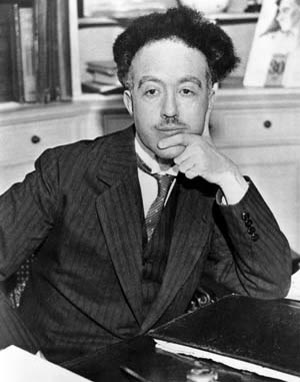
Louis de Broglie
लुइ द ब्रोइ
Nobel laureate credited to pioneer the discovery of wave character of matter (1892–1987)
नेपालीमा पढ्नुहोस् · हिंदी में पढ़ें
- नेपाली · English · हिंदीRead in your language
- CitedEvery fact sourced
- Ad-freeNo ads, no tracking
Louis Victor Pierre Raymond, 7th Duc de Broglie (15 August 1892 – 19 March 1987) was a French theoretical physicist and aristocrat known for his contributions to quantum theory. In his 1924 Ph.D. thesis, he postulated the wave nature of electrons and suggested that all matter has wave properties. This concept is known as the de Broglie hypothesis, an example of wave–particle duality, and forms a central part of the theory of quantum mechanics. In 1929, de Broglie won the Nobel Prize in Physics, after the wave-like behaviour of matter was experimentally confirmed in 1927. This confirmation earned George Paget Thomson and Clinton Davisson the Nobel Prize in Physics in 1937.
Quick facts
Positions held wd
- president (1956–1972)
- President of the International Union of History and Philosophy of Science (1953–1956)
- President of the Division of History of Science and Technology (1953–1956)
- Member of the Académie française (12 October 1944 – 19 March 1987)
- professor (1933–1962)
- honorary presidency
Awards wd
- Grand Cross of the Legion of Honour
- Nobel Prize in Physics (1929)
- Commander of the French Order of Academic Palms
- CNRS Gold medal (1955)
- Max Planck Medal (1938)
- Kalinga Prize (1952)
- Helmholtz Medal (1975)
- honorary doctorate at the Laval University (1947)
- honorary doctor of the University of Warsaw
- Foreign Member of the Royal Society (1953)
- Great Gold medal of the Société d'Encouragement au Progrès (1962)
- Officer of the Order of Leopold
- honorary doctor of the University of Athens
- Honorary doctor of the University of Lausanne
About
The wave-like behaviour of particles theorized by de Broglie was used by Erwin Schrödinger in his formulation of wave mechanics.
De Broglie presented an alternative interpretation of these mechanics called the pilot-wave concept at the 1927 Solvay Conferences, but then abandoned it. In 1952, David Bohm developed a new form of the concept which became known as the de Broglie–Bohm theory. De Broglie revisited the idea in 1956, creating another version that incorporated ideas from Bohm and Jean-Pierre Vigier.
Louis de Broglie was the sixteenth member elected to occupy seat 1 of the Académie Française in 1944, and served as Perpetual Secretary of the French Academy of Sciences. De Broglie became the first high-level scientist to call for establishment of a multi-national laboratory, a proposal that led to the establishment of the European Organization for Nuclear Research (CERN). Among his publications were The Revolution in Physics and Matter and Light. He was honorary president of the French Association of Science Writers and received the inaugural Kalinga Prize from UNESCO for his efforts to popularize science.
People also search for
 Donald Trump
 Ronald Reagan
 Abraham Lincoln
 George W. Bush
 Mustafa Kemal Atatürk
 Franklin D. Roosevelt
 René Taton
Questions
- When was Louis de Broglie born?
- Louis de Broglie was born on 15 August 1892 in Dieppe.
- What positions has Louis de Broglie held?
- Positions held by Louis de Broglie include: president (1956–1972); President of the International Union of History and Philosophy of Science (1953–1956); President of the Division of History of Science and Technology (1953–1956); Member of the Académie française (1944–1987); professor (1933–1962).
- Where did Louis de Broglie study?
- Louis de Broglie was educated at Science Faculty of Paris, Lycée Janson-de-Sailly.
Sources
- Wikipedia (English): Louis de Broglie · CC BY-SA 4.0
- Wikipedia (Nepali): लुइ द ब्रोइ · CC BY-SA 4.0
- Wikidata item Q83331 · CC0 1.0
- Image: Broglie Big.jpg by Unknown author Unknown author (Public domain)

Last updated · facts checked 4 November 2026
Cite this page
"Louis de Broglie". DigiNepal. Last updated 1 November 2026. https://diginpl.com/people/louis-de-broglie. Retrieved 4 November 2026.
Is this you, or do you work in this person's office? Claim this profile