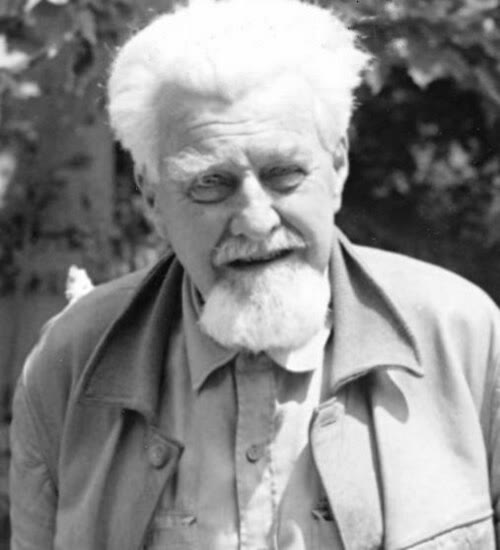
Konrad Lorenz
Austrian zoologist, winner of the Nobel Prize in Physiology or Medicine in 1973 (1903–1989)
नेपालीमा पढ्नुहोस् · हिंदी में पढ़ें
- नेपाली · English · हिंदीRead in your language
- CitedEvery fact sourced
- Ad-freeNo ads, no tracking
Konrad Zacharias Lorenz (Austrian German: [ˈkɔnraːd tsaxaˈriːas ˈloːrɛnts] ; 7 November 1903 – 27 February 1989) was an Austrian zoologist, ethologist, and ornithologist. He shared the 1973 Nobel Prize in Physiology or Medicine with Nikolaas Tinbergen and Karl von Frisch. He is often regarded as one of the founders of modern ethology, the study of animal behavior. He developed an approach that began with an earlier generation, including his teacher Oskar Heinroth.
Quick facts
- Born
- wd
- Place of birth
- Vienna wd
- Died
- wd
- Place of death
- Vienna wd
- Citizenship
- Austria wd
- Occupation
- ethologist, zoologist, university teacher, writer, physician, philosopher wd
- Political party
- Nazi Party (1938–1944) wd
- Education
- Columbia University, University of Vienna, University of Vienna wd
- Spouse
- Margarethe Gebhardt wd
Positions held wd
- psychologist
Awards wd
- Nobel Prize in Physiology or Medicine (1973)
- Prix mondial Cino Del Duca (1969)
- Great Cross with Star and Sash of the Order of Merit of the Federal Republic of Germany
- Pour le Mérite for Sciences and Arts order (1969)
- Kalinga Prize (1969)
- Bavarian Maximilian Order for Science and Art (1984)
- Prize of the City of Vienna for Natural Sciences (1959)
- honorary citizen of Vienna (1983)
- Foreign Member of the Royal Society (1964)
- Austrian Decoration for Science and Art (1964)
- Pour le Mérite
About
Lorenz studied instinctive behavior in animals, especially in greylag geese and jackdaws. Working with geese, he investigated the principle of imprinting, the process by which some nidifugous birds (i.e. birds that leave their nest early) bond instinctively with the first moving object that they see within the first hours of hatching. Although Lorenz did not discover the topic, he became widely known for his descriptions of imprinting as an instinctive bond. In 1936, he met Tinbergen, and the two collaborated in developing ethology as a separate sub-discipline of biology. A Review of General Psychology survey, published in 2002, ranked Lorenz the 65th most cited scholar of the 20th century in the technical psychology journals, introductory psychology textbooks, and survey responses.
Lorenz's work was interrupted by the onset of World War II, and in 1941 he was recruited into the German Army as a medic. In 1944, he was sent to the Eastern Front, where he was captured by the Soviet Red Army and spent four years as a German prisoner of war in Soviet Armenia. After the war, he regretted his membership in the Nazi Party.
Lorenz wrote numerous books, some of which, such as King Solomon's Ring, On Aggression, and Man Meets Dog, became popular reading. His last work Here I Am – Where Are You? is a summary of his life's work and focuses on his famous studies of greylag geese.
People also search for
 Eric Kandel
 Charles Richet
 Roger Wolcott Sperry
 André Frédéric Cournand
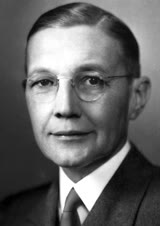 Herbert Spencer Gasser
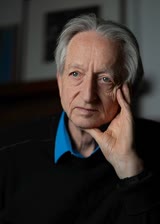 Geoffrey Hinton
Questions
- When was Konrad Lorenz born?
- Konrad Lorenz was born on 7 November 1903 in Vienna.
- What positions has Konrad Lorenz held?
- Positions held by Konrad Lorenz include: psychologist.
- Where did Konrad Lorenz study?
- Konrad Lorenz was educated at Columbia University, University of Vienna, University of Vienna.
Sources
- Wikipedia (English): Konrad Lorenz · CC BY-SA 4.0
- Wikidata item Q78496 · CC0 1.0
- Image: Konrad Lorenz.JPG by Max Planck Gesellschaft ( Eurobas ) (CC BY-SA 3.0)

Last updated · facts checked 6 November 2026
Cite this page
"Konrad Lorenz". DigiNepal. Last updated 31 October 2026. https://diginpl.com/people/konrad-lorenz. Retrieved 7 November 2026.
Is this you, or do you work in this person's office? Claim this profile