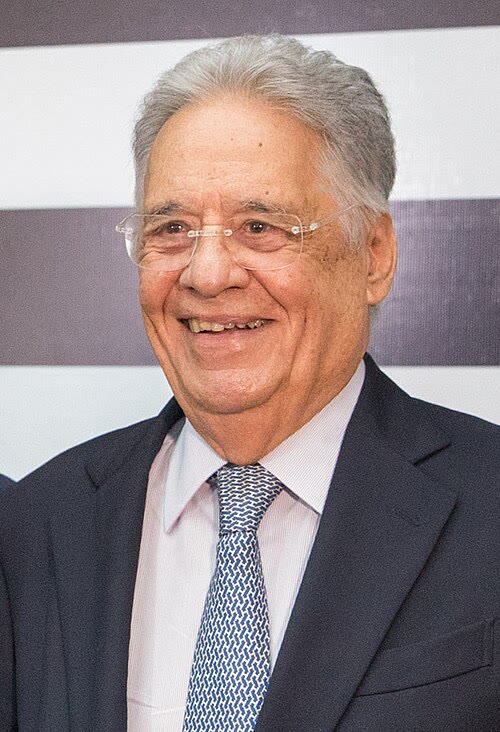
Fernando Henrique Cardoso
President of Brazil from 1995 to 2003
नेपालीमा पढ्नुहोस् · हिंदी में पढ़ें
- नेपाली · English · हिंदीRead in your language
- CitedEvery fact sourced
- Ad-freeNo ads, no tracking
Fernando Henrique Cardoso (Brazilian Portuguese: [feʁˈnɐ̃du ẽˈʁiki kaʁˈdozu] ; born 18 June 1931), also known by his initials FHC (Brazilian Portuguese: [ˌɛfjaɡaˈse] ), is a Brazilian sociologist, professor, and politician who served as the 34th president of Brazil from 1 January 1995 to 1 January 2003. He was the first Brazilian president to be reelected for a subsequent term. An accomplished scholar of dependency theory noted for his research on slavery and political theory, Cardoso has earned many honors including the Prince of Asturias Award for International Cooperation (2000) and the Kluge Prize from the US Library of Congress (2012).
Quick facts
Positions held wd
- President of Brazil (1 January 1999 – 1 January 2003)
- President of Brazil (1 January 1995 – 1 January 1999)
- Minister of Finance of Brazil (19 May 1993 – 30 March 1994)
- São Paulo senator (15 March 1983 – 5 October 1992)
Awards wd
- Grand Collar of the Order of Prince Henry
- Order of the Elephant (1999)
- Collar of the Order of the Star of Romania
- Grand Cross of the Order of the White Double Cross (2001)
- Order of the White Eagle
- Kluge Prize (2012)
- Knight Grand Cross of the Order of the Bath
- Collar of the Order of Isabella the Catholic (1998)
- Grand Cross of the National Order of Scientific Merit
- Princess of Asturias Award for International Cooperation (2000)
- Grand Cross of the Legion of Honour
- J. William Fulbright Prize (2003)
- Grand Cross Special Class of the Order of Merit of the Federal Republic of Germany (1995)
- Order of the Condor of the Andes
- Grand Cross with Collar of the Order of the White Rose of Finland (1997)
About
A native of the city of Rio de Janeiro, he moved with his family to the city of São Paulo, where, in 1953, he married anthropologist and fellow university student Ruth Vilaça Correia Leite, with whom he had three children. FHC earned a degree in Sociology from the University of São Paulo and later became a professor emeritus at the same institution. Following the 1964 military coup, he faced persecution and went into exile in Chile and France, returning to Brazil in 1968. He taught at foreign universities and built a significant academic career, producing numerous award-winning social studies. After the impeachment of Fernando Collor, he was appointed by Itamar Franco to serve as Minister of Foreign Affairs and, subsequently, Minister of Finance. In the latter role, he led the development of the Plano Real, which stabilized the economy. Bolstered by the success of this economic plan, he was elected President of the Republic in the first round of the 1994 election.
Cardoso was inaugurated as President on 1 January 1995. He continued the economic reforms that had been initiated by the previous administration, inflation rates remained low, several state-owned companies were privatized, and market liberalization increased the…
People also search for
 João Goulart
 Luiz Inácio Lula da Silva
 Dilma Rousseff
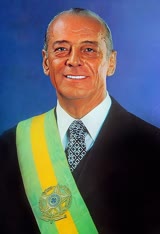 João Figueiredo
 Ranieri Mazzilli
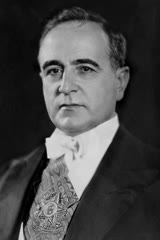 Getúlio Vargas
 Luiz Carlos Bresser-Pereira
 Rodrigues Alves
 Gustavo Krause
 Ciro Gomes
Questions
- When was Fernando Henrique Cardoso born?
- Fernando Henrique Cardoso was born on 18 June 1931 in Rio de Janeiro.
- What positions has Fernando Henrique Cardoso held?
- Positions held by Fernando Henrique Cardoso include: President of Brazil (1999–2003); President of Brazil (1995–1999); Minister of Finance of Brazil (1993–1994); São Paulo senator (1983–1992).
- Where did Fernando Henrique Cardoso study?
- Fernando Henrique Cardoso was educated at University of São Paulo.
Sources
- Wikipedia (English): Fernando Henrique Cardoso · CC BY-SA 4.0
- Wikidata item Q230578 · CC0 1.0
- Image: FHC 2019.jpg by Governo do Estado de São Paulo (CC BY 2.0)

Last updated · facts checked 6 November 2026
Cite this page
"Fernando Henrique Cardoso". DigiNepal. Last updated 31 October 2026. https://diginpl.com/people/fernando-henrique-cardoso. Retrieved 6 November 2026.
Is this you, or do you work in this person's office? Claim this profile