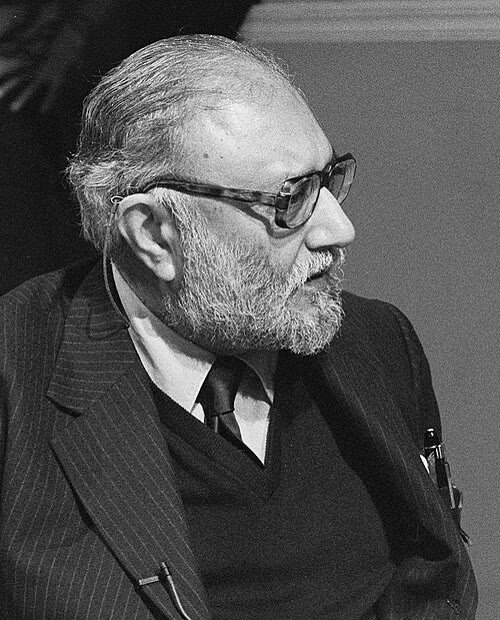
Abdus Salam
Theoretical physicist, and Nobel Prize in Physics recipient
नेपालीमा पढ्नुहोस् · हिंदी में पढ़ें
- नेपाली · English · हिंदीRead in your language
- CitedEvery fact sourced
- Ad-freeNo ads, no tracking
Mohammad Abdus Salam (; 29 January 1926 – 21 November 1996) was a Pakistani theoretical physicist and Nobel laureate. He shared the 1979 Nobel Prize in Physics with Steven Weinberg and Sheldon Glashow "for their contributions to the theory of the unified weak and electromagnetic interaction between elementary particles, including, inter alia, the prediction of the weak neutral current". He was the first Pakistani, and second person from any Muslim country (after Anwar Sadat of Egypt) to win a Nobel Prize.
Quick facts
Awards wd
- Atoms for Peace Award (1968)
- Fellow of the Royal Society (1959)
- Pride of Performance
- Copley Medal (1990)
- Royal Medal (1978)
- Nobel Prize in Physics (1979)
- Lomonosov Gold Medal (1983)
- Hughes Medal (1964)
- Matteucci Medal (1978)
- Honorary doctors of Ghent University (1988)
- Catalonia International Prize (1990)
- TWAS fellow (1983)
- National Order of Scientific Merit
- J. Robert Oppenheimer Memorial Prize (1971)
- Nishan-e-Pakistan
About
Salam was scientific advisor to the Ministry of Science and Technology in Pakistan from 1960 to 1974, a position from which he played a major and influential role in the development of the country's science infrastructure. Salam contributed to numerous developments in theoretical and particle physics in Pakistan. He was the founding director of the Space and Upper Atmosphere Research Commission (SUPARCO). For this, he is viewed as the "scientific father" of this program. In 1974, Abdus Salam departed from his country in protest after the Parliament of Pakistan unanimously passed a parliamentary bill declaring members of the Ahmadiyya Muslim community, to which Salam belonged, non-Muslim.
Salam's notable achievements include the Pati–Salam model, a Grand Unified Theory he proposed along with Jogesh Pati in 1974, magnetic photon, vector meson, work on supersymmetry and most importantly, electroweak theory, for which he was awarded the Nobel Prize. Salam made a major contribution at Imperial College London. Salam made important contributions to the modern theory on neutrinos, as well as the work on modernising quantum mechanics. As a teacher and science promoter, Salam is remembered as a founder and scientific father of theoretical physics in Pakistan during his term as the chief scientific advisor to the president. Salam heavily contributed to the rise of Pakistani…
People also search for
 Chris Tomic
 Eduard Kučera
 Jan Koum
 Joe Gebbia
 Luke Nosek
 Miriam Adelson
 Tatiana Roque
 Aage Bohr
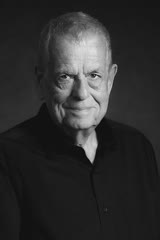 Aaron Ciechanover
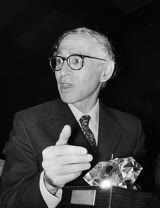 Aaron Klug
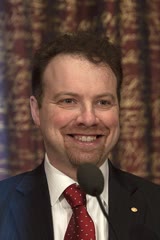 Adam Riess
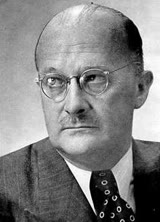 Adolf Windaus
Questions
- When was Abdus Salam born?
- Abdus Salam was born on 29 January 1926 in Jhang.
- Where did Abdus Salam study?
- Abdus Salam was educated at Government College University, University of the Punjab, St John's College, Sanatan Dharma College.
Sources
- Wikipedia (English): Abdus Salam · CC BY-SA 4.0
- Wikidata item Q28189 · CC0 1.0
- Image: Abdus Salam 1987 (cropped).jpg by Molendijk, Bart / Anefo (CC BY-SA 3.0 nl)

Last updated · facts checked 4 November 2026
Cite this page
"Abdus Salam". DigiNepal. Last updated 31 October 2026. https://diginpl.com/people/abdus-salam. Retrieved 5 November 2026.
Is this you, or do you work in this person's office? Claim this profile