Eid al-Fitr
ईद उल फित्र
Public holidayMuslim
Dates
| 2083 BS | 11 Mar 2027 (27 Falgun 2083 BS) · in 150 days | Reported by Wikipedia source |
| 2084 BS | 1 Shawwal — date to be announced | Date to be announced |
When: 1 Shawwal (Wikipedia)
Eid al-Fitr is the first of the two main festivals in Islam, the other being Eid al-Adha. The holiday falls on the first day of Shawwal, the tenth month of the Islamic calendar. One of the most important Islamic celebrations, Eid al-Fitr is celebrated by Muslims worldwide as it marks the end of the month-long, dawn-to-dusk fasting (sawm) during Ramadan. The holiday is known under various other names in different languages and countries around the world.
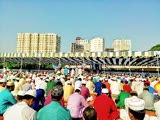
Eid al-Fitr begins with a communal prayer and is followed by visits to relatives, giving gifts, and sharing meals. It has a particular salah that consists of two rakats generally performed in an open field or large hall. It may only be performed in congregation (jamāʿat) and features six additional Takbirs (raising of the hands to the ears whilst reciting the Takbir, saying "Allāhu ʾAkbar", meaning "God is the greatest"). In the Hanafi school of Sunni Islam, there are three Takbirs at the start of the first rakat and three just before rukūʿ in the second rakat. Other Sunni schools usually have 12 Takbirs, similarly split in groups of seven and five. In Shia Islam, the salat has six Takbirs in the first rakat at the end of Tilawa, before rukūʿ, and five in the second. Depending on the juristic opinion of the locality, this salat is either farḍ (فرض, obligatory) or mustaḥabb (strongly recommended). After the salat, Muslims celebrate the Eid al-Fitr in various ways with food being a central theme, which also gives the holiday the nickname "Sweet Eid" or "Sugar Feast".
In many parts of the world, Eid al-Fitr is also characterized by distinctive local customs that reflect regional cultures. Communities often mark the occasion with large family visits, public celebrations, and the sharing of traditional foods and sweets prepared specifically for the holiday. Markets and neighborhoods in several countries become especially lively as people buy new clothing, gifts, and festive meals, while charitable giving and community gatherings remain central elements of the celebration. Despite cultural differences, the festival commonly emphasizes social connection, generosity, and the strengthening of family and community ties.
नेपालीमा
इस्लामले मुस्लिम समुदायका लागि दुईवटा पर्व प्रचलनमा ल्याएको छ । तिनीहरू ईदुल फित्र - ईद र ईदुज्जुहा - बकरी ईद हुन् । यी दुईमध्ये पहिलो पर्व ईदुल फित्र अरबी पात्रोको नवौँ महिना रमजानका २९ वा ३० दिन रोजा - राखेको खुसियालीमा मनाइन्छ भने दोस्रो पर्व त्यो अद्वितीय कुरबानी -बलिदानको सम्झना हो जो आजभन्दा चार हजार वर्ष पहिला हजरत इब्राहिमले आफ्नो पालनहार अल्लाहका सम्मुख प्रस्तुत गरेका थिए । इस्लाम धर्मावलम्बिहरूले संसारभरी नै प्राय: एकै किसिमले मनाउने यो चाड नेपालमा वसोवास गर्ने मुसलमानहरूले पनि धूमधामका साथ मनाउँदछ्न् । बकरिद नामले पुकारिने मुसलमानहरूले हिजरिसम्वत् अनुसार उदर्भ महिनामा १ महिनासम्म मनाइने प्रमुख चाड हो । यसको नियममा १ महिनासम्म सुर्यन नअस्ताउन्जेल पूर्णरुप उपवास (व्रत) बस्ने र अर्को महिनाको शुरूको दिनको चन्द्रमाको दर्शन गरेपछी खाने चलन छ । नव वर्षको शुभकामना स्वरूप इद मुवारकको आदानप्रदान गरिन्छ ।
Observed by: Muslims
History
According to Muslim tradition, Muhammad instituted the celebration of Eid al-Fitr. According to a certain hadith, these festivals were initiated in Medina after the migration of Muhammad from Mecca. Anas ibn Malik, a companion of Muhammad, narrated that when Muhammad arrived in Medina, he found people celebrating two specific days in which they entertained themselves with recreation. Muhammad then remarked that God had fixed two mandatory days of festivity: Eid al-Fitr and Eid al-Adha.
General rituals
Eid al-Fitr begins at sunset on the night of the first sighting of the crescent moon. The night on which the moon is sighted is celebrated as Chand Raat in countries like Bangladesh. If the moon is not observed immediately after the 29th day of the previous lunar month (either because clouds block its view or because the western sky is still too bright when the moon sets), then the holiday is celebrated the following day. Eid al-Fitr is celebrated for one to three days, depending on the country. It is forbidden to fast on the Day of Eid, and a specific prayer is nominated for this day. As an obligatory act of charity, money is paid to the poor and the needy (zakat al-Fitr) before performing the 'Eid prayer.
Post-prayer celebration
During the Eid celebration, Muslims greet each other by saying 'Eid Mubarak', which is Arabic for "Blessed Eid". As it comes after a month of fasting, sweet dishes and foods are often prepared and consumed during the celebration. Muslims typically decorate their homes, and are also encouraged to forgive each other and seek forgiveness. In countries with large Muslim populations, it is normally a public holiday with most schools and businesses closed for the day. Practices differ by country and region.
