Christmas
क्रिसमस
Public holidayChristian
Dates
| 2083 BS | 25 Dec 2026 (10 Poush 2083 BS) · in 74 days | Official holiday list source |
| 2084 BS | * December 25 ** Western Christianity and part of the Eastern churches * January 6 ** Armenian Apostolic Church and the Armenian Evangelical Church * January 7(O.S. December 25) ** Most Oriental Orthodox and part of the Eastern Orthodox churches * January 19(O.S. January 6) ** Armenian Patriarchate of Jerusalem — date to be announced | Date to be announced |
When: * December 25 ** Western Christianity and part of the Eastern churches * January 6 ** Armenian Apostolic Church and the Armenian Evangelical Church * January 7(O.S. December 25) ** Most Oriental Orthodox and part of the Eastern Orthodox churches * January 19(O.S. January 6) ** Armenian Patriarchate of Jerusalem (Wikipedia)
Christmas is a festival commemorating the birth of Jesus Christ, observed primarily on December 25 as a religious and cultural celebration among billions of people around the world. A liturgical feast central to Christianity, Christmas preparation begins on the First Sunday of Advent. Advent is followed by Christmastide, which historically in the West lasts twelve days and culminates on Twelfth Night. Christmas Day is a public holiday in many countries and is observed by a majority of Christians; it is also celebrated culturally by many non-Christians and forms an integral part of the annual festive holiday season.
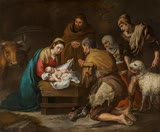
The traditional Christmas narrative recounted in the New Testament, known as the Nativity of Jesus, says that Jesus was born in Bethlehem, in accordance with messianic prophecies. When Joseph and Mary arrived in the city, the inn had no room, and so they were offered a stable where the Christ Child was soon born, with angels proclaiming this news to shepherds, who then spread the word.
There are different hypotheses regarding the date of the birth of Jesus. In the early fourth century, the church fixed the date as December 25, the date of the winter solstice in the Roman Empire. It is nine months after Annunciation on March 25, also the Roman date of the spring equinox. Most Christians celebrate on December 25 in the Gregorian calendar, which has been adopted almost universally in the civil calendars used in countries throughout the world. However, part of the Eastern Christian Churches celebrate Christmas on December 25 of the older Julian calendar, which currently corresponds to January 7 in the Gregorian calendar. Most major Christian denomaniations do not hold December 25 to be the definitive historical date of Jesus' birth, but nonetheless celebrate it on this date as tradition as well as it being the earliest attested date.
The customs associated with Christmas in various countries have a mix of pre-Christian, Christian, and secular themes and origins. Popular holiday traditions include gift-giving; completing an Advent calendar or Advent wreath; Christmas music and carolling; watching Christmas films; viewing a Nativity play; an exchange of Christmas cards; attending church services; a special meal; and displaying various Christmas decorations, including Christmas trees, Christmas lights, nativity scenes, poinsettias, garlands, wreaths, mistletoe, and holly. Additionally, several related and often interchangeable figures, known as Santa Claus, Father Christmas, Saint Nicholas, and Christkind, are associated with bringing gifts to children during the Christmas season and have their own body of traditions and lore. Because gift-giving and many other aspects of the Christmas festival involve heightened economic activity, Christmas has become a significant event and a key sales period for retailers and businesses. Over the past few centuries, Christmas has had a steadily growing economic effect in many regions of the world.
नेपालीमा
क्रिसमस विश्वभरका इसाई धर्माबलम्बीहरूले इसा मसिह अथवा जिसस क्राइस्टको जन्मदिनको उपल्क्षयमा मनाइने पर्व हो । यो २५ डिसेम्बरमा पर्छ र यस दिन लगभग सम्पूर्ण विश्वमा सार्वजनिक विदा दिइन्छ। क्रिसमस देखि १२ दिनको उत्सव क्रिसमसटाइडको पनि शुरुवात हुन्छ।
Observed by: Christians, Alawites, many others
Observance and traditions
Christmas Day is celebrated as a major festival and public holiday in countries around the world, including many whose populations are mostly non-Christian. In some non-Christian areas, periods of former colonial rule introduced the celebration (e.g. Hong Kong); in others, Christian minorities or foreign cultural influences have led populations to observe the holiday. Countries such as Japan, where Christmas is popular despite there being only a small number of Christians, have adopted many of the cultural aspects of Christmas, such as gift-giving, decorations, and Christmas trees. A similar example is in Turkey, being Muslim-majority and with a small number of Christians, where Christmas trees and decorations tend to line public streets during the festival. Many popular customs associated with Christmas developed independently of the commemoration of Jesus's birth, with some claiming that certain elements are Christianized and have origins in pre-Christian festivals that were celebrated by pagan populations who were later converted to Christianity; other scholars reject these claims and affirm that Christmas customs largely developed in a Christian context. The prevailing atmosphere of Christmas has also continually evolved since the holiday's inception, ranging from a sometimes raucous, drunken, carnival-like state in the Middle Ages, to a tamer family-oriented and children-centered theme introduced in a 19th-century transformation.
Traditional cuisine
A special Christmas family meal is traditionally an important part of the holiday's celebration, and the food served varies greatly from country to country. Some regions have special meals for Christmas Eve, such as Sicily, where 12 kinds of fish are served. In the United Kingdom and countries influenced by its traditions, a standard Christmas meal includes turkey, goose or other large bird, gravy, potatoes, vegetables, sometimes bread, cider, and, in more recent decades, nut roast. Special desserts are also prepared, such as Christmas pudding, mince pies, fruit cake and Yule log cake. In Poland and Scandinavia, fish is often used for the traditional main course, but richer meat such as lamb is increasingly served. In Sweden, it is common with a special variety of smörgåsbord, where ham, meatballs, and herring play a prominent role. In Germany, France, and Austria, goose and pork are favored. Beef, ham, and chicken in various recipes are popular worldwide. The Maltese traditionally serve Imbuljuta tal-Qastan, a chocolate and chestnuts beverage, after Midnight Mass and throughout the Christmas season. Slovenes prepare the traditional Christmas bread potica, bûche de Noël in France, panettone in Italy, and elaborate tarts and cakes.
.jpg)